
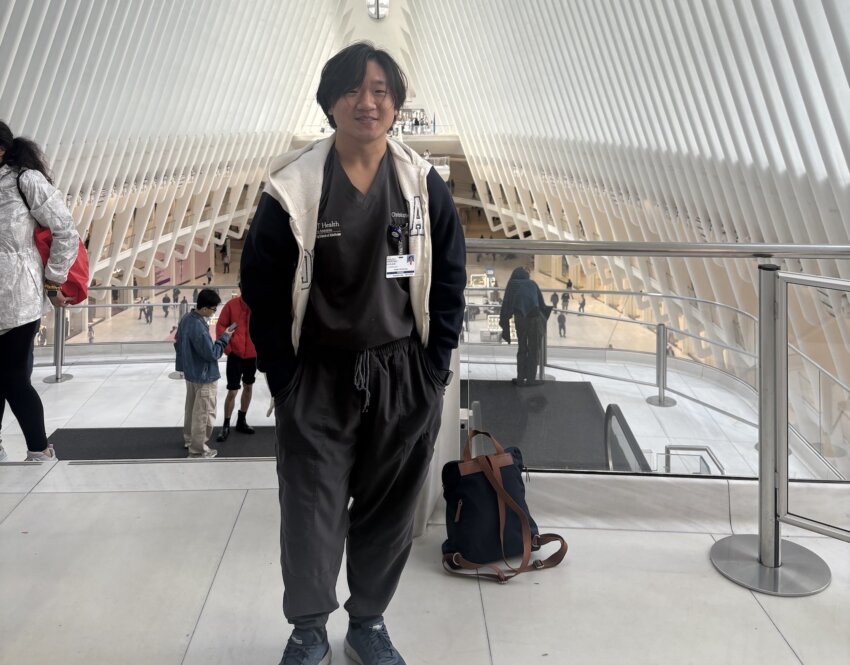
For medical student Christopher Mao, the path to medicine didn’t begin in a clinic, but in an engineering lab.
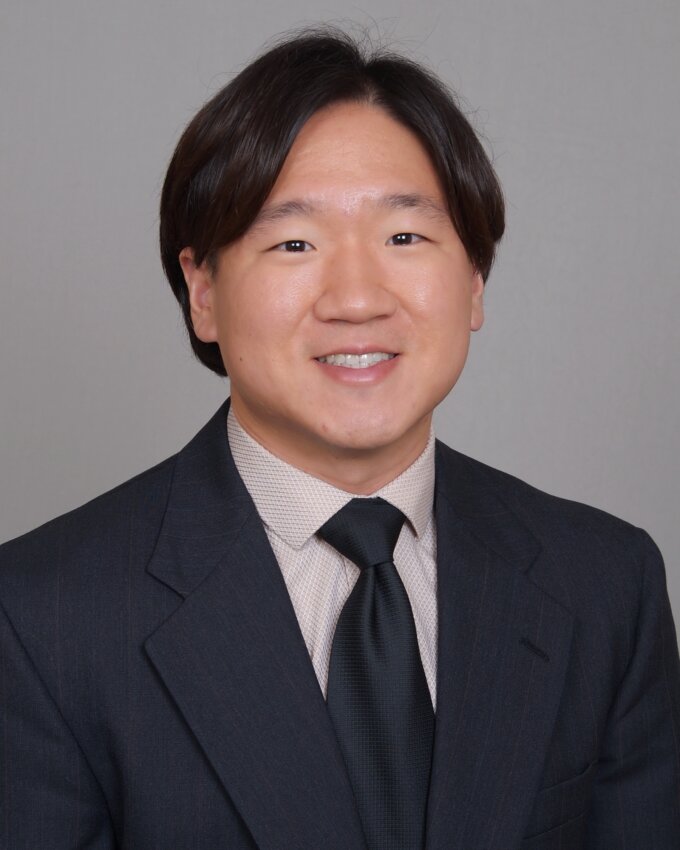
Originally from Sugar Land, Texas, Mao entered The University of Texas at Austin with a passion for math, problem-solving and building things, ultimately pursuing a degree in electrical engineering. As an undergraduate, he worked on a range of biomedical and medical-adjacent technologies, from building EKG systems to experimenting with brain-computer interfaces that used EEG signals to control robotic arms.
For Mao, the work was fascinating, but something was missing.
“I realized I didn’t just want to build the technology,” he said. “I wanted to be involved in patient care.”
From lab bench to bedside
Encouraged by a mentor who bridged both worlds — serving as both an ophthalmologist and engineering professor — he began to see a path forward. Clinical shadowing experiences confirmed that instinct, shifting his focus from the lab bench to the bedside.
When it came time to choose a medical school, the Joe R. and Teresa Lozano Long School of Medicine stood out not only for its academic offerings, but for its people.
“From the start, it felt welcoming,” he said. “My interviewers were genuinely engaged in my experiences and interests. That made a big difference.”
Advancing clinical insight through AI research
Following his technical background, Mao decided to pursue the school’s MD/MSAI program where he gained hands-on experience with machine learning and its clinical applications.
Under the guidance of his mentor, Ronald Rodriguez, MD, PhD , director of the MD/MSAI program and professor in the Department of Urology, Mao studied renal intravascular tumor extension, or RITE, a rare and aggressive form of kidney cancer in which the tumor spreads into nearby veins. Using gene expression data, bioinformatics and AI, his research identified key molecular differences between RITE tumors and other kidney cancers. The findings could help researchers develop new biomarkers to detect the disease earlier and guide more targeted treatments, ultimately improving care and outcomes for patients.
“This research has been meaningful to me because it showed how AI can be used not only to automate tasks, but also to inform new discoveries and uncover biological patterns that may eventually improve patient care,” Mao said. “It has also helped shape my broader interest in academic medicine and in finding ways to combine AI, clinical research and patient care.”
Contributing to medical education and public health
 In addition to his research, Mao co-authored a chapter on “Generative AI in Medical Education” for a textbook, AI in Clinical Practice: Enhancing Medical Education, which is expected to be published later this year by CRC Press/Taylor & Francis. This will be one of the first textbooks focused specifically on how AI may transform medical education.
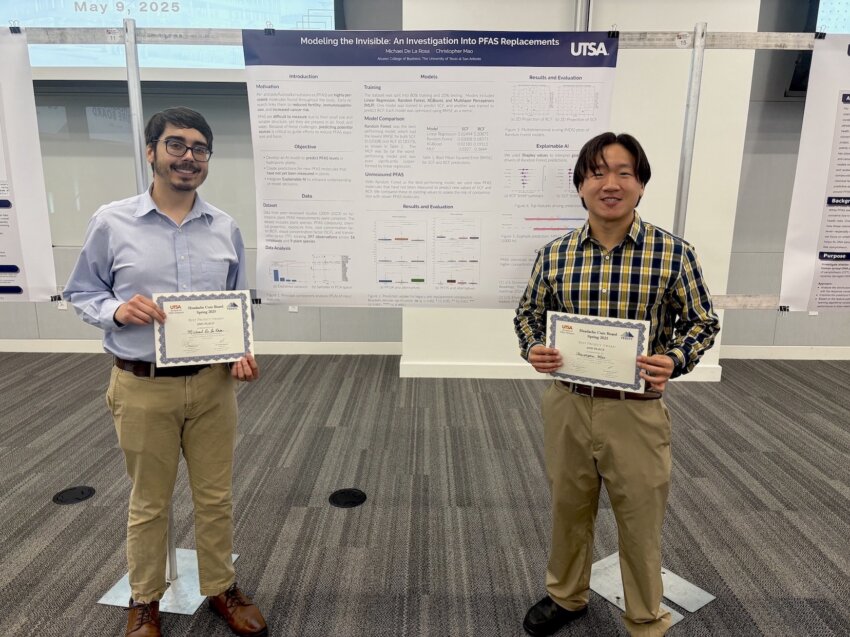
Mao also got the opportunity to engage in public and environmental health. As president of a student organization focused on climate and health, he led initiatives and later contributed to research on PFAS (per- and polyfluoroalkyl substances, commonly known as “forever chemicals”), examining their presence in water systems and how they accumulate in plants. His team earned recognition in a regional competition for that work.
Finding purpose in internal medicine
During his third-year clinical rotations, Mao kept an open mind, exploring a wide range of specialties. But internal medicine consistently stood out.
One patient interaction in particular helped solidify his decision: working with a patient facing hepatocellular carcinoma alongside complex social and family challenges.
“It showed me that medicine isn’t just about diagnosing,” he said. “It’s about being present, listening and supporting patients through difficult moments.”
That perspective of balancing clinical knowledge with human connection continues to shape his career goals, which include a strong interest in cardiology.
Looking ahead to residency and academic medicine
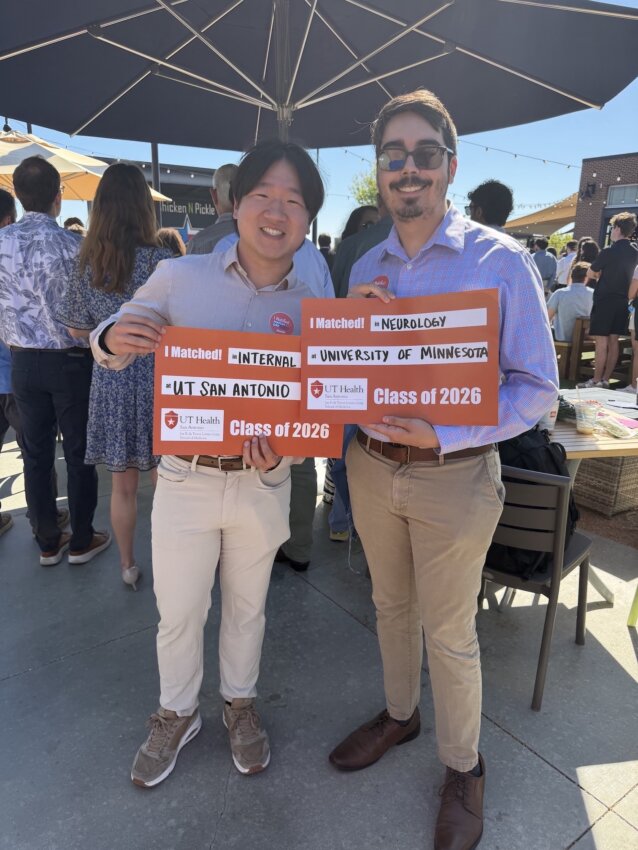 Mao will remain at UT San Antonio for his residency in internal medicine. As he looks ahead to residency and beyond, he envisions a future in academic medicine, where he can continue exploring the intersection of technology and patient care while mentoring the next generation of physicians.
“I’ve had the chance to pursue a lot of different interests,” he said. “Now I see how they all come together. As I continue training in internal medicine, I remain interested in cardiology and am also curious about areas such as cardio-oncology, where cardiovascular medicine, cancer care and translational research intersect.”
Click here for more information about the Class of 2026 commencement ceremonies.