


Contact: Steven Lee, (210) 450-3823, lees22@uthscsa.edu
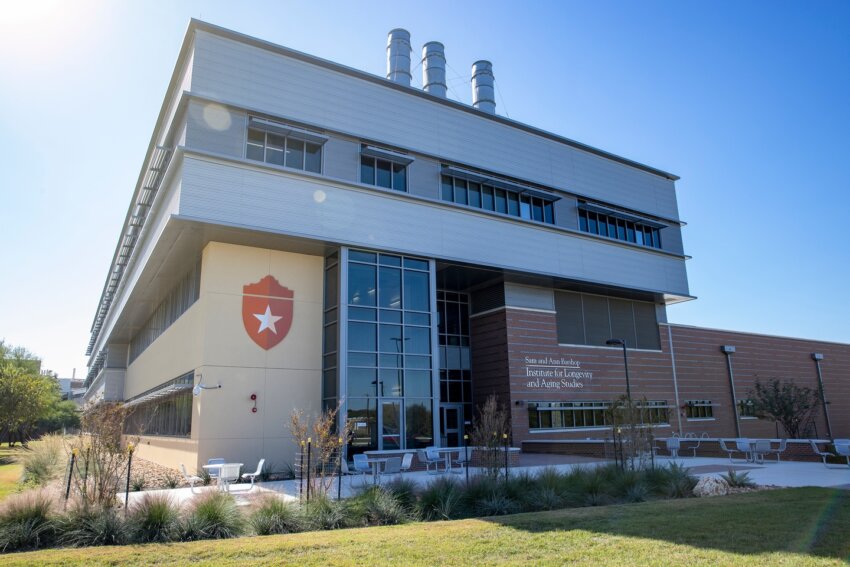
SAN ANTONIO, Feb. 24, 2026 – Positioning The University of Texas at San Antonio as a national anchor for aging and longevity science, its Sam and Ann Barshop Institute for Longevity and Aging Studies will receive up to $38 million in federal funding for the first nationwide clinical study in healthy longevity.
The Advanced Research Projects Agency for Health (ARPA-H), an agency of the U.S. Department of Health and Human Services, announced the contract to the Barshop Institute at UT Health San Antonio, the academic health center of UT San Antonio, cementing its standing as the nation’s leading authority in longevity science. The first-of-its-kind study will evaluate the repurposing of FDA-approved medications to delay age-related health and functional decline in generally healthy middle-aged adults, ages 60 to 65.
The contract will support the Validation and Intervention Testing for Aging, Longevity and Healthspan (VITAL-H) trial, which is integrated into the ARPA-H Proactive Solutions for Prolonging Resilience (PROSPR) program. Specifically, the Barshop Institute will use the VITAL-H trial to study the medications rapamycin, dapagliflozin and semaglutide, which based on strong preclinical evidence, promising early human data and extensive post-marketing safety experience may positively affect age-related decline in quality of life and lifespan.
“PROSPR is designed to identify therapeutics that show the aging process is not an inevitable slide into disability,” said Andrew Brack, PhD, ARPA-H program manager and creator of the PROSPR program. “VITAL-H will help show whether we can preserve everyday abilities during a critical window of midlife aging.”
For the Barshop Institute, it is the culmination of decades of pioneering biomedical science, a national vote of confidence and a proven model to translate aging research into real-world clinical impact. And it is further evidence of UT San Antonio’s growing national research standing, providing a platform for the next decade of leadership in aging science.
“For decades, the Barshop Institute has helped define the biology of aging,” said Jennifer Sharpe Potter, PhD, MPH, senior executive vice president for research and innovation for UT San Antonio. “Today, that foundational science has matured into a national clinical research effort – led from San Antonio – that will shape the future of human health and longevity.”

Barshop Institute director Elena Volpi, MD, PhD, who along with her team of investigators are nationally recognized leaders in healthy longevity research, will head the new effort.
“Over the past 50 years, global life expectancy has increased substantially, yet the age of onset of age-related diseases and disabilities has remained largely unchanged,” Volpi said. “Our population is living longer but with declining function, increased disability and reduced quality of life with major implications for healthcare utilization, caregiver burden and societal costs. Despite major advances in the biology of aging, no FDA-approved interventions currently exist to delay the onset of age-related functional decline or preserve health span in otherwise healthy adults.
“This work is focused on changing that trajectory,” she said, “advancing science that can help people live not just longer lives, but healthier ones in the decades ahead.”
The PROSPR program is intended to identify biochemical and physiological markers and develop assessment tools that allow researchers to better understand and target the underlying causes of age-related disease and build interventions focused on maintaining health during aging.
The FDA-approved rapamycin, dapagliflozin and semaglutide medications all have distinct mechanisms of action, are orally administered and have favorable safety profiles at low doses, enabling long-term use in generally healthy populations.
The trial is designed to deliver evidence on whether repurposed, FDA-approved drugs can slow age-related decline in generally healthy older adults as well as provide the first large-scale validation of Intrinsic Capacity, which is the concept for healthy aging addressing a person’s physical and mental capabilities. Intrinsic Capacity is evaluated by testing cognition, mobility (locomotor), psychological, vitality and sensory functions, to gauge health in aging individuals.
The VITAL-H trial will use wearable technologies to monitor the study population selected to capture a critical window in which functional decline is measurable, yet disease burden remains relatively low. Participants will be recruited from South Texas, a region with a demographic makeup that closely mirrors the projected U.S. population in the coming decades, making the results relevant to our country’s future population aging.
“By reframing aging as a modifiable functional trajectory rather than an inevitable accumulation of disease, the study establishes a scalable, regulatory-grade framework for preventive interventions that could possibly inform future clinical development and positively affect people’s lives as they age,” Volpi said.
Clinical trials targeting aging have previously focused on treatment after disease onset, are often underpowered, and rely on narrow or single-modality clinic-based outcomes that limit sensitivity, generalizability and scalability. The VITAL-H clinical trial is designed to evaluate aging interventions earlier in the life course using endpoints capable of detecting meaningful functional change within feasible timeframes.
While the award will be centered at the Barshop Institute, located in the San Antonio Medical Center, there will be multiple partner locations throughout the city.
Regional locations and partners will include the San Antonio Geriatric Research, Clinical and Research Center (GRECC); the South Texas Veterans Health Care System (STVHCS); the Texas Diabetes Institute (TDI); the West San Antonio Food Bank (SAFB); and a UT Health San Antonio mobile clinical research clinic.
For more information on the VITAL-H Trial, visit the Barshop Institute Current Clinical Trials website at: https://barshopinstitute.uthscsa.edu/clinical-trials/
This research was, in part, funded by the Advanced Research Projects Agency for Health (ARPA-H). The views and conclusions contained in this document are those of the authors and should not be interpreted as representing the official policies, either expressed or implied, of the United States Government.
The Sam and Ann Barshop Institute for Longevity and Aging Studies at UT Health San Antonio is one of the world’s premier institutes dedicated to the study of age-related diseases. The Barshop Institute is the only aging-intensive research institute in the country to have five peer-reviewed designations: three National Institute on Aging (NIA)-funded centers (Nathan Shock, Claude D. Pepper, and Population Aging and Social Studies centers), a lead site of the NIA-sponsored Interventions Testing Program, and a U.S. Department of Veterans Affairs Geriatric Research, Education and Clinical Center. UT Health San Antonio is the academic health center of The University of Texas at San Antonio (UT San Antonio).