

Researcher awarded $4.6 million to study DNA repair, cancer biology

June 25, 2026

A scientist at The University of Texas at San Antonio was recently awarded two grants totaling more than $4.6 million from the National Institutes of Health to study how cells repair DNA to protect the genome, the set of genetic instructions within our cells.



UT San Antonio MD/PhD graduate student earns top NIH ranking for research proposal

June 23, 2026

  A third-year MD/PhD graduate student from The University of Texas at San Antonio (UT San Antonio), Christopher Mullally, recently received funding from the National Institutes of Health National Cancer Institute for a project examining how the body regulates internal sources of mutation and how breakdowns in that regulation may contribute to cancer development. While […]


UT Health San Antonio awarded American Cancer Society SHaRP grant to advance cervical cancer screening

June 9, 2026

Contact: Eileen Teves, 210-450-7239, tevese@uthscsa.edu Content provided by Lauren Michalk SAN ANTONIO, June 9, 2026 – UT Health San Antonio has been selected as a recipient of the American Cancer Society’s Self-Collected Human Papillomavirus Readiness Pilot (SHaRP) grant, a national initiative designed to help health care organizations prepare for and implement HPV self-collection as part […]


CPRIT awards newly integrated UT San Antonio to further its mission to combat cancers across South Texas

June 2, 2026

The University of Texas at San Antonio and its academic health center, UT Health San Antonio, recently received over $2.7 million in new academic and prevention awards from the Cancer Prevention and Research Institute of Texas (CPRIT) to further its mission of combating cancers across South Texas. Since 2010, CPRIT has awarded the newly integrated UT San Antonio almost $186 million.


AI-assisted colonoscopy enhances polyp detection

May 20, 2026

UT Health San Antonio is using AI-assisted colonoscopy technology to help physicians detect precancerous polyps in real time, expanding access to advanced colorectal cancer prevention and early detection for South Texans.

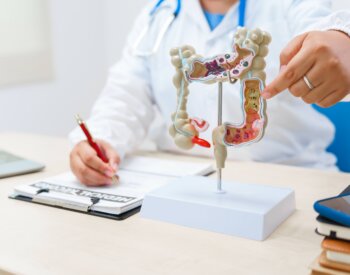
A doctor holds a human colon anatomy model, demonstrating the digestive system's structure to diagnose and treat various gastrointestinal diseases and conditions.