
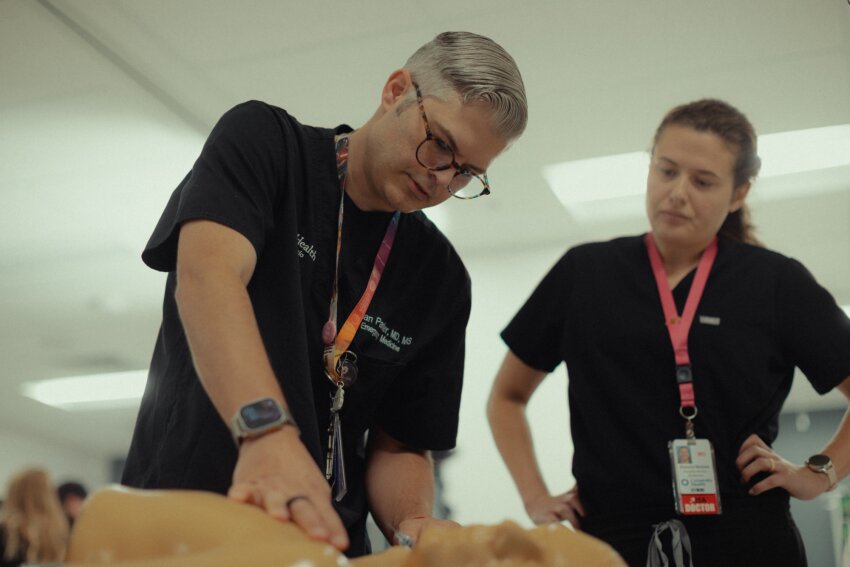
Ten years after graduating its first class, the Long School of Medicine’s Emergency Medicine Residency Program at The University of Texas at San Antonio has become a workforce pipeline for South Texas, training residents to care for and understand the unique needs of patients in the community.
Building a workforce for South Texas
When the Emergency Medicine Residency Program was first established in 2013, it immediately began serving a critical need in the community. San Antonio and the surrounding region face well-documented healthcare access challenges, including federally recognized shortages in primary care, dental care and mental health services. The Health Resources and Services Administration has identified and designated portions of Bexar County as Health Professional Shortage Areas or Medically Underserved Areas. For many patients, those gaps can make the emergency department one of the most reliable points of entry into the health care system.
“There was always a huge need in the community to have this program,” said Christopher Gelabert, MD, director of the Emergency Medicine Residency Program at the Joe R. and Teresa Lozano Long School of Medicine and associate director of UT Health San Antonio’s Ultrasound Division. “The question here was never, where are we going to see patients? How are we going to see enough patients? The community was already here, basically begging for us to meet that need. From the start, even as a new program, it became automatically entrenched in the community, and the needs were served on day one and have been served since then.”
The program’s clinical training is centered at University Hospital, part of University Health System, which has served as the university’s primary teaching partner for the Long School of Medicine and UT Health San Antonio since 1968. With rotations based at University Hospital, the largest ER in San Antonio and home to South Texas’ busiest Level I trauma center for adult care, residents in the program are trained for every scenario imaginable and are prepared to take their skills anywhere in the country.
Gelabert said the program is also built around keeping physicians in the community as a priority.
“Since the founding of the residency program, the goal was to be a premier training program for South Texas, with a focus on retaining people in San Antonio and South Texas and contributing to the community to provide really high-quality emergency care across the region,” he said.
Serving the unique needs of the community
Gelabert said the residency program intentionally shapes its education around the needs and experiences of the patients it serves. The curriculum emphasizes the broad range of factors that influence health, wellness and healthcare outcomes and brings in people from different patient populations to share their perspectives directly with residents.
“We really try to hone our education in a way that is very reflective of our patients,” Gelabert said. “The goal is to prepare the residents for all of these things that they’re going to see. Not only from a medical perspective — yes, we manage a lot of diabetes, uncontrolled hypertension and a lot of heart disease — but we also focus on managing a lot of social issues and understanding how to provide quality medical care in a very challenging environment.”
Residents see those challenges firsthand, gaining a clearer understanding of how access to care, community resources and social needs shape what brings patients to the emergency department.
“Sometimes their only access to care is through the emergency department,” said Allison Vasak, MD, a third-year resident in the program. “This is a community that definitely needs more ER physicians and physicians who know their situation and their background and how we can best serve them.”
For many of those patients, an emergency visit may be one of the few points of contact they have with the healthcare system. That reality gives emergency physicians a unique role in treating acute illness or injury while also connecting patients to care and resources when other options are limited.
“As ER doctors, you definitely take some degree of pride in being the safety net for the community,” said AJ Graham, DO, a third-year resident in the program. “When people lose their transportation or have other barriers and lack primary care follow-up, we’re always the welcoming hand that can bring them in and offer the help that they can’t get elsewhere.”
That mission extends well beyond San Antonio. Because of the region’s size and rural areas, specialty care needs and gaps in access, the emergency department often serves patients from across South Texas who travel long distances for answers and treatment.
“We definitely see a lot of people from all around South Texas. Pretty much every shift I work, someone says that they drove in from Laredo or from somewhere two to three hours away because this is where their specialists are,” said Leanna Dolson, MD, Core Clerkship director of Emergency Medicine Undergraduate Medical Education. “They’ve sought care somewhere else, and they feel like they’re not getting definitive answers, they’re not getting the follow-up that they need, or they don’t have the specialists that they need. And so they’ll make the trip here. That’s an important role that we serve.”
A decade of impact
A decade after its first class graduated in 2016, that safety-net mission is reflected not only in the care residents provide during training, but also in where many graduates choose to practice afterward.
“Now we’ve had 10 years of graduates who have gone all across the country, and many of them commit here to South Texas and San Antonio. We’re lucky enough to keep some of our own as faculty who have also been here since the day they graduated,” Gelabert said. “We’re graduating more doctors, and we’re able to staff more emergency departments with very highly trained, very skilled people who have seen it all.”
The program now trains 13 residents per class and is based in one of the busiest emergency departments in the country. Of the 123 physicians who have graduated from the program since its first class, 33 have remained in San Antonio or South Texas to practice emergency medicine.
Even as the department and residency program have grown, Gelabert said the need for emergency care in San Antonio and South Texas remains significant, underscoring the importance of continuing to train physicians who understand the communities, access challenges and patient populations they will serve.
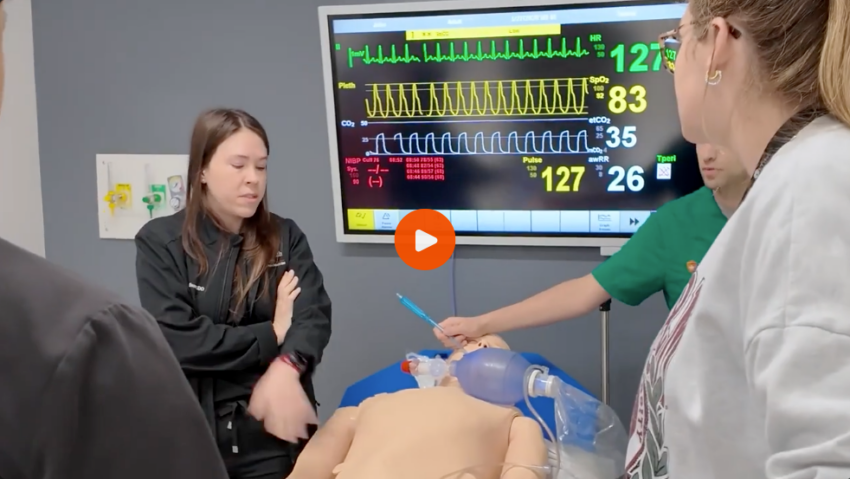
Watch the video below to learn more about how Emergency Medicine residents serve the community: