


This story is featured in the October issue of BCMS San Antonio Medicine magazine.
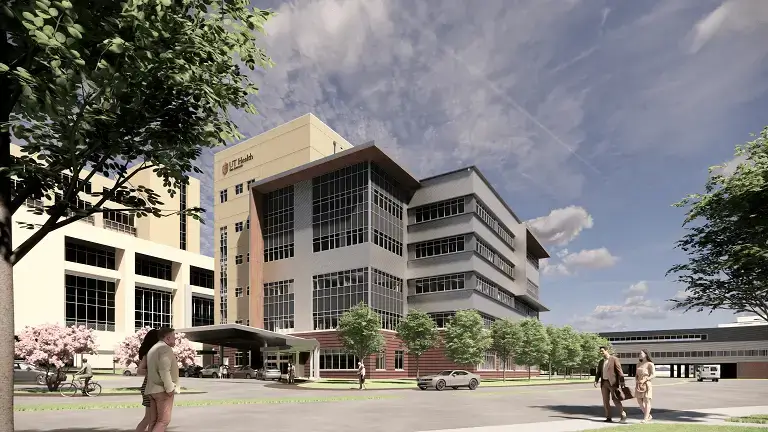
After nearly a decade of planning, The University of Texas at San Antonio Health Science Center will open the doors of its innovative Center for Brain Health in December 2025. The $100 million, 103,000-square-foot facility brings together clinical care, research, and caregiver support — all under one roof — and promises to change how we understand and treat diseases of the brain.
Vision years in the making
The vision began more than seven years ago when Sudha Seshadri, MD, DM, professor of neurology and founding director of the Glenn Biggs Institute for Alzheimer’s and Neurodegenerative Diseases, sought to create a dedicated space for research and patient care.
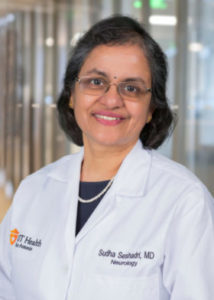
“My hope is that we can make Alzheimer’s a condition people live with and manage, like diabetes or high blood pressure,” Seshadri said. “That’s the kind of hope we’re working to bring to every patient.”
That hope resonates with Carlayne Jackson, MD, FAAN, chair of the Department of Neurology and professor of neurology and otolaryngology.
“When I was an early neurology resident, there were no treatments and nothing we could do for these devastating conditions,” she said. “The Center for Brain Health is a place of hope and innovation where we can diagnose, manage symptoms, optimize function, and support patients and families for the journey ahead.”
State-of-the-art design, location
A unique aspect of this project is that Seshadri, Jackson, and other faculty members worked side-by-side with architects and designers throughout the planning period.
“The architects didn’t just hand us a draft of the blueprints. We were there every step of the way,” Jackson said.
With input from the community, the team created a welcoming space where patients and their families are invited to work in tandem with healthcare professionals for treatment of these devastating brain diseases.
Located adjacent to the Medical Arts and Research Center and near the new UT Health San Antonio Multispecialty and Research Hospital, the center will foster collaboration across clinical and research teams.
“This center is the culmination of years of effort to build a space that not only meets the care needs of patients and families, but also expands our research capacity,” said Seshadri. “A diagnosis doesn’t define a person, and it certainly doesn’t stop their story.”
Integration of research, patient care
Jackson said what excites her most about the center is the integration of patient care and research.
“Many of the disorders we treat don’t yet have therapies that stop or even slow progression,” she said. “Being able to manage patients in the same space where research and clinical trials are happening is something we’ve never had before.”

The center will treat conditions such as Alzheimer’s disease and other dementias, stroke, amyotrophic lateral sclerosis (ALS), and Parkinson’s disease with multidisciplinary teams of neurologists, therapists, counselors and support staff — reducing the need for multiple appointments in different locations. It will feature 75 exam rooms, 12 infusion chairs for new and investigational treatments, and specialty areas for therapy, diagnostics, and wellness.
Jackson has long championed this model of care. She developed the department’s first multidisciplinary ALS clinic in 1996 and dreamed of expanding the approach to all neurological conditions.
“We just didn’t have the space, capacity or funding to do it, and now we do,” she said.
Other services will include geriatric psychiatry, neuropsychology, genetic counseling, nutrition, physical therapy, and mental health support. A physical therapy gym will allow comprehensive assessments on-site. Community spaces will host support groups and educational programs for families. The center will also house Texas’ first 7-Tesla magnetic resonance imaging scanner, providing ultra-high-resolution brain scans for early diagnosis and novel research.
Personal journey behind the mission
For Jackson, the mission is also personal. As a resident, she navigated the healthcare system for her son with a neurological disorder, coordinating therapy and medical visits across multiple locations.
“The burden of handling his medical care was more overwhelming than the fact that I had a handicapped child,” she said. “I always believed there had to be a better model of care, and that belief guided how we set this facility up.”
Meeting the neurodegeneration challenge
“As our country and state get older, we’re facing an epidemic of neurodegeneration,” Jackson said. “We’ve been effective at treating cancer and diabetes, but if we don’t take this next bold step now, we’ll be facing a public health crisis with no effective treatments.”
Ultimately, both leaders say, the center is designed to instill confidence.
“Being diagnosed with any brain disorder can feel devastating and isolating,” Jackson said. “I want patients to know they are receiving the best, most comprehensive care possible from a team that truly cares.”
“The Center for Brain Health represents hope — a place where care and discovery come together to preserve brain health, ensure early diagnosis and help people keep doing what they love for as long as possible,” Seshadri said.
For more information about the new center, visit https://uthscsa.edu/physicians/center-brain-health