



Contact: Steven Lee, 210-450-3823, lees22@uthscsa.edu
Content by Claire Kowalick
SAN ANTONIO, Nov. 24, 2025 – A new project led by scientists at the School of Dentistry at UT Health San Antonio, the academic health center of The University of Texas at San Antonio, is shining a light on childhood oral disease, one of South Texas’ most pervasive health challenges.
With one of the lowest dentist-to-patient ratios in the U.S., and some of the nation’s highest childhood cavity rates, the research team is launching a school-centered program to promote prevention and build lifelong healthy habits. They seek to turn elementary school teachers into “oral health champions” for students ages 5 to 10.

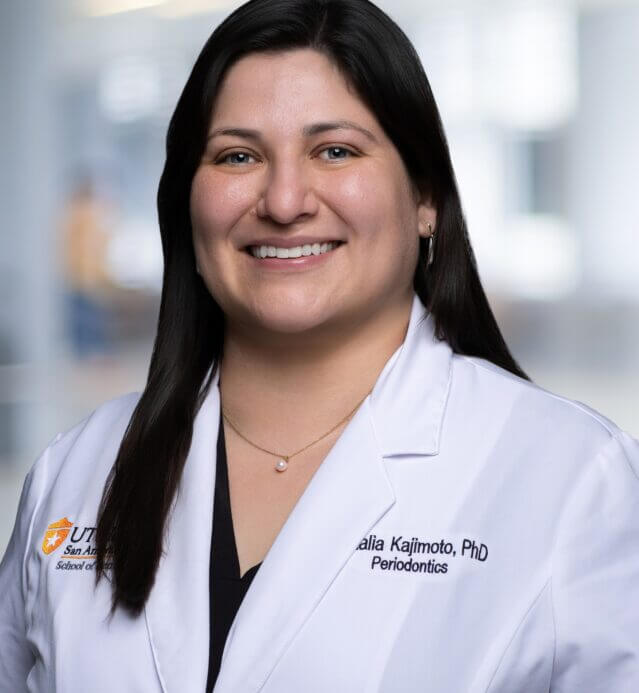
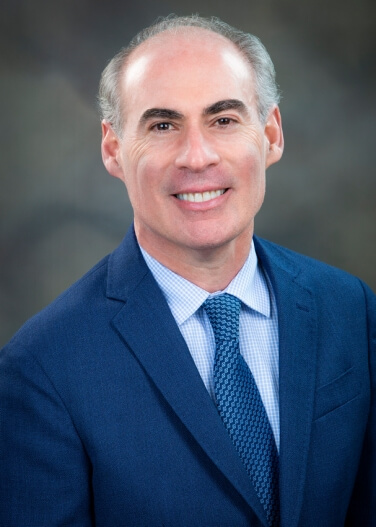
The two-year initiative is headed by a team of investigators at the Center for Global and Community Oral Health led by Yvonne Buischi, DDS, PhD, professor in the Department of Periodontics, with co-investigators Peter Loomer, DDS, PhD, professor and the center’s director; Natalia Kajimoto, DDS, PhD, assistant professor in the Department of Periodontics; Noorpreet Kaur, BDS, MPH, assistant clinical professor in the Department of Comprehensive Dentistry; and Sergio Funari, DDS, PhD, Institute of Infectious Diseases Emilio Ribas Sao Paulo, Brazil.
By providing educators with knowledge, training and classroom resources, the program aims to empower teachers to deliver lessons on preventing cavities and gum problems by encouraging children to care for their teeth. The study is made possible through a grant from Colgate-Palmolive.
Oral health matters
Oral health is inseparable from overall health. Untreated dental cavities can cause pain, difficulty eating and malnutrition. In severe cases, the consequences extend far beyond the mouth, compromising general health and quality of life.
Despite advances in dental science, tooth decay remains the most common chronic disease of childhood in the United States, with students missing more than 34 million school hours each year because of unplanned dental care. Nationally, more than half of Texas kindergarteners and two-thirds of third-graders have experienced cavities, according to state health data.
“Prevention is our most powerful tool,” Buischi said. “By reaching children early, before the damage occurs, we can change the trajectory of oral health for an entire generation.”
Why teachers?
Because they see students every day and maintain close connections with families, teachers are uniquely positioned to help shape children’s health habits. But research shows that many elementary school teachers lack adequate training and confidence to address oral health.
The research team sees this gap as an opportunity. By developing an engaging, culturally tailored curriculum and providing hands-on training, the program will give teachers the confidence and tools they need to integrate oral health education seamlessly into classroom activities.
“Teachers are natural health promoters,” Kajimoto said. “With the right support, they can help instill habits that last a lifetime.”
Inside the program
The project will recruit 150 elementary school teachers from across South Texas, dividing them into three groups: in-person training, live online training and self-directed online modules. Each group will receive the same core curriculum, which covers dental cavities, gum disease and oral-systemic connections.
Teachers will also participate in oral hygiene demonstrations and group discussions designed to help them practice and refine their skills before taking them into the classroom. Teachers will receive booklets, lesson plans and supplementary classroom resources, and many materials will be provided both in English and Spanish.
Teachers will complete surveys before training to check knowledge and then at 14 days, and three, six and 12 months after training to assess retention of knowledge and identify challenges in classroom implementation. Refresher seminars will allow educators to share successes, ask questions, and exchange ideas.
Beyond the classroom
The hope is that the program teaches children about oral health and has ripple effects that benefit the whole community. When teachers improve their own knowledge about oral health, they become advocates for their students, but also for families and communities.
“We are planting seeds that will grow far beyond the classroom walls,” Loomer said. “Teachers can be powerful agents of change, inspiring healthier behaviors in entire communities.”
The initiative also builds pathways to care. For example, if teachers identify children with urgent dental needs, they can make referrals to the School of Dentistry, which serves as a safety-net provider for the region.
Vision for the future
By 2027, the team expects to have trained at least 150 teachers and reached thousands of children with preventive education that could change their lifelong health outcomes.
“Every child deserves the chance to grow up free from preventable pain and disease,” Buischi said. “By empowering teachers, we are giving communities the tools to build a healthier future.”
How to sign up
The project is actively recruiting teachers. Interested educators who teach elementary school children ages 5-10 in the South Texas area are eligible. Compensation is provided for participation. Please contact kajimonton@uthscsa.edu to sign up.
UT Health San Antonio is the academic health center of The University of Texas at San Antonio (UT San Antonio), offering a comprehensive network of inpatient and outpatient care facilities staffed by medical, dental, nursing and allied health professionals who conduct more than 2.5 million patient visits each year. It is the region’s only academic health center and one of the nation’s leading health sciences institutions, supported by the schools of medicine, nursing, dentistry, health professions, graduate biomedical sciences and public health that are leading change and advancing fields throughout South Texas and the world. To learn about the many ways “We make lives better®,” visit UTHealthSA.org.
The School of Dentistry at The University of Texas at San Antonio (UT San Antonio), ranked as the No. 1 dental school in Texas by the Academic Ranking of World Universities, offers 18 degrees and programs in both dentistry and dental hygiene, world-renowned faculty educators, a diverse student population, state-of-the-art clinical facilities and a distinguished research enterprise. Departments include comprehensive dentistry, developmental dentistry, endodontics, periodontics, predoctoral dentistry, and oral and maxillofacial surgery. Scientists collaborate with clinicians and research teams worldwide, and work across multiple medical and dental disciplines to find new treatments, advancing knowledge of oral health, biomaterials, cancer, pain and more. It supports the university’s academic health center, UT Health San Antonio. UT Dentistry, the clinical practice of the School of Dentistry, practices in the Center for Oral Health Care and Research, serving the general population.
To learn more, visit https://www.uthscsa.edu/academics/dental.
Stay connected with UT Health San Antonio on Facebook, Twitter, LinkedIn, Instagram and YouTube.