

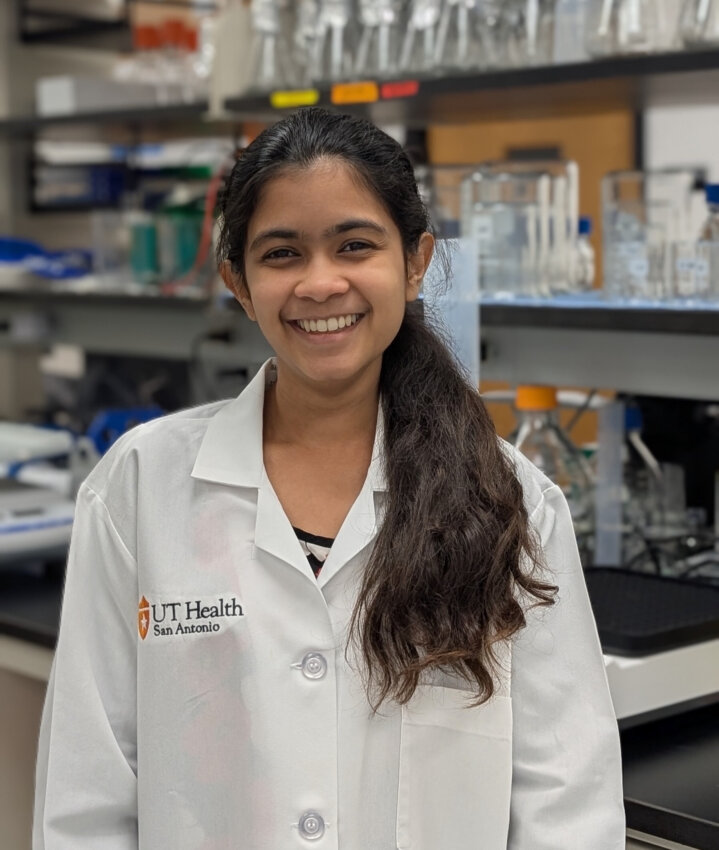
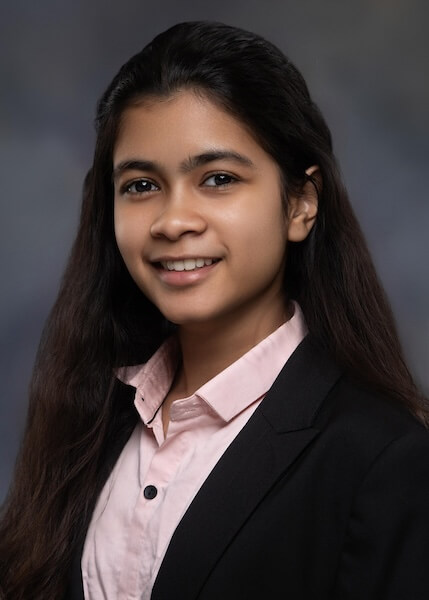
Ishita Tarnekar was a bit scared and overwhelmed as an international student starting her doctoral program at the Graduate School of Biomedical Sciences in 2024.
But not for long.
Thanks to the school’s Transition Peer Mentor Program for masters and doctoral students, she got her footing with guidance from her mentor, also an international student, on a variety of topics — from filling out documents to building her network and finding funded faculty looking for students to join their research lab.
“It’s always good to have a peer who knows who just got funding or who just received grants and they can come tell you that maybe you should go talk to this person,” Tarnekar said. “It was also good in [creating] a network because [my mentor] knew a lot of people, so she knew whom to reach out to for a problem or even for guidance.”
Tarnekar’s experience as a mentee was so impactful that the doctoral student, who is now conducting research in cancer biology, wanted to give back and become a mentor this year.
This is quite common for the program. Of the 41 mentees in the program in the 2024–25 academic year, nearly a third signed up to be mentors for the 2025–26 academic year.
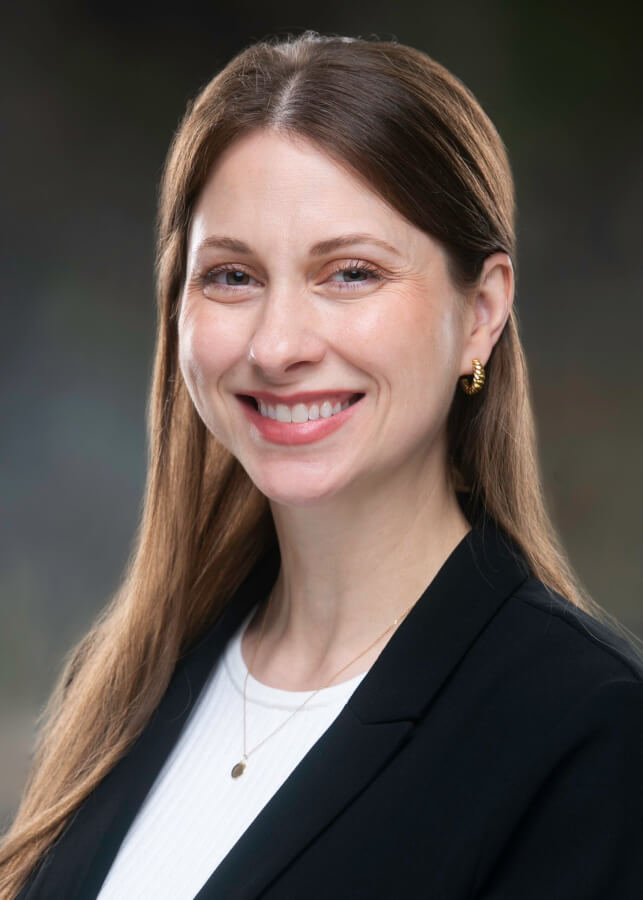
“Frequently, we see that students who were mentored as new graduate students want to give back because the impact was so great,” said Jennifer Davila, PhD, director, Research Mentoring Initiatives, Graduate School of Biomedical Sciences, and assistant professor, Department of Medical Education, Joe R. and Teresa Lozano Long School of Medicine. “They’re hoping to pass along the same beneficial information that they received from their previous mentors.”
Navigating the graduate educational journey
When the Transition Peer Mentor Program kicked off this academic year with its first monthly meeting in September 2025, 17 pairs of mentees and mentors met for the first time. The mentoring pairs represent a range of research disciplines, classifications and backgrounds, but all are either masters or doctoral students in the Graduate School of Biomedical Sciences.
During the facilitated session led by Davila, the topics focused on getting to know San Antonio and acclimating as a first-year student. This is Davila’s first year at the helm as the program’s facilitator, and she’s created a comfortable setting to provide an anchor of familiarity for the mentees and mentors, with two meetings scheduled each month: one full-group facilitated session with a brief lesson and discussion topics, and one non-facilitated session where the mentor and mentee pair are encouraged to meet up outside of the classroom setting.
“The intention of the peer mentoring program is for mentors to be role models and help their mentees navigate the ups and downs of being a graduate student and point them to resources available on campus,” Davila said.
“From a new student’s perspective, they may come in [wondering], what is a qualifying exam?” Davila said. “What does it mean to advance to candidacy or defend a thesis or dissertation? All of these questions are unique to the MS or PhD experience. So, we’ll do a deeper dive into what to expect in terms of graduate education milestones from the direct perspective of an experienced student mentor. We also foster conversations around dealing with stress, as well as other career pathway development.”
While the facilitated sessions are there for stability, the pairs are also encouraged to meet outside of the larger group to build a sense of trust and rapport.
“We’re hoping to promote community as well as help develop resilience, because whenever the mentees meet with their peer mentors and they hear about these hurdles and challenges and successes that other students have gone through already, the mentees can feel a sense of ‘if they can do it, I can do it too,’” Davila said.
When Tarnekar met her mentee during the program’s first facilitated session, she saw much of herself in her mentee.
“My mentee was a little shy or a little hesitant to talk,” Tarnekar said. “But, when I met her again, she was like, ‘Oh, you know, this is the problem I’m having.’ And then she actually opened up about different things.” Then Tarnekar shared her phone number and offered for her mentee to reach out whenever she wanted.
Overcoming imposter syndrome
According to Davila, another aspect of the mentorship program is breaking down imposter syndrome, a psychological condition characterized by ongoing persistent doubt in one’s own abilities and accomplishments, coupled with a fear of being exposed as a fraud despite evidence of ongoing success.
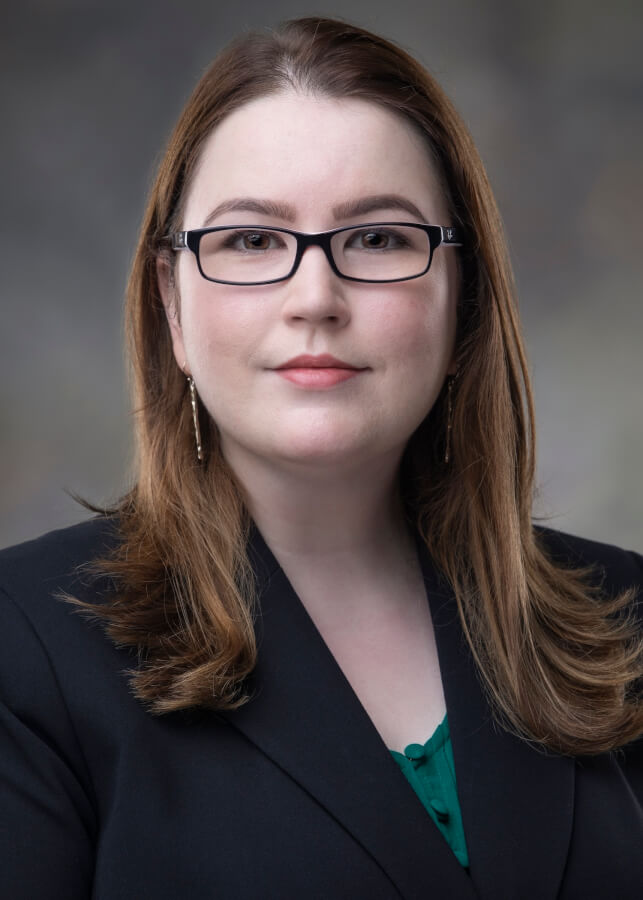
“The first semester is a very critical time for imposter syndrome to set in for our students,” said Jessica Nute, PhD, assistant dean of student affairs, Graduate School of Biomedical Sciences.
“Academic medicine is a unique environment with its own rules, different hierarchies and different expectations. During this critical time for students, they face a higher degree of rigor in their coursework and seek to find a research mentor — probably one of the most important decisions they will make,” Nute said.
Their choice of a research mentor “defines the environment that they’re going to be working in, what research they’re going to be doing and who is going to primarily oversee their work,” Nute said. “The more people, the more networking and the more guidance they can receive in that first semester, the better they can make that important decision.”
Adding touches of personalization
Eight years ago, the focus of the Transition Peer Mentor Program was mostly academic. Later, it expanded, thanks to input from the school’s international students. They requested a similar program for the international population, many of whom are not only transitioning to a new school, but also to a new country with a different culture, academic setting, rules and expectations, Nute said.
“So, for a short period, we had both our traditional peer mentoring program and then what we called our International Ambassadors Program,” Nute said. The international program was more focused on helping students acclimate to their new surroundings by identifying area grocery stores, helping with the international visa process and answering questions.
“We learned a lot about the transition of our international students … and the challenges that they face starting with day one,” Nute said. “Getting off the plane, not having a credit card and everything’s Uber.” So, a representative from the international program would go and pick the students up from the airport and help them find housing.
“Our international students helped shape a community-centered culture that we now see as one of the program’s greatest strengths,” Nute said.
Ultimately, the Transition Peer Mentor Program began to incorporate much of the cultural and supportive elements that focused on the emotional transition to graduate school, and in 2024, the two programs merged. At that time, 11 of the 41 mentees were international students.
“That expanded [the Transition Peer Mentor Program] from just an academic support to a lifestyle support, to an emotional support, to having a buddy you can go to and ask questions,” Nute said, adding that every change that’s been made to the program is based on student feedback.
“We survey our students regularly,” she said. “We’ll have listening sessions. We speak to them, and every cohort is unique. Their needs are unique and so our response must be unique.”
Matching mentors and mentees with similar goals
First-year students at the Graduate School of Biomedical Sciences can learn about the Transition Peer Mentor Program at their orientation through the weekly student newsletter or through a personalized email. Once students express interest in being a mentee, they receive a survey.
“Not every student has the same career goals, so we ask [the new graduate students] to rank priorities for this mentoring relationship, and one of the priorities we ask them about is career pathway advising,” Davila said. “If the most important thing to their career pathway is academia, then that student may be matched with a mentor who is pursuing a similar path. We hope to match [mentees] with a peer mentor who has similar goals in mind and therefore they can share advice or map out a career plan together.”
Following the path of lived experiences
For new students, having someone who has already walked a similar path can be comforting and provide a sense of community.
“Sometimes when you’re just new to a program, you feel like there is already a lot to do,” Tarnekar said, adding that new students may not feel like signing up for extra things. “But I think something like this [program], it’s not that big of a commitment and it’s based on your flexibility. So even if you couldn’t make it to a meeting on certain day, having a five-to-10-minute check-in on some evening makes a huge difference.
“It’s something [that] is going to benefit you in the long run,” Tarnekar continued. “It’s something that all graduate students should consider, because we always learn from experiences. I am still learning from my peers. Those experiences are always invaluable, and they help you in some way.”
Tarnekar knows this firsthand. Through her peer mentor, she became involved in student clubs like Women in Science, and she’s built a strong network — including her peer mentor, who is now a good friend.
“Having a peer who you can talk to about literally anything and everything is very helpful on decision-making and navigating [your path],” Tarnekar said. “They are always there to cheer you up. So that helps you know [that you’ve] got this, you will get through this. These are small things, but they matter a lot.”
To learn more about the Transition Peer Mentor Program in the Graduate School of Biomedical Sciences, contact Davila at schmerber@uthscsa.edu.