


Cells in the body are in a constant process of repairing damaged DNA. In a diseased state, such as cancer, this process can break down, leading to the instability of genes.
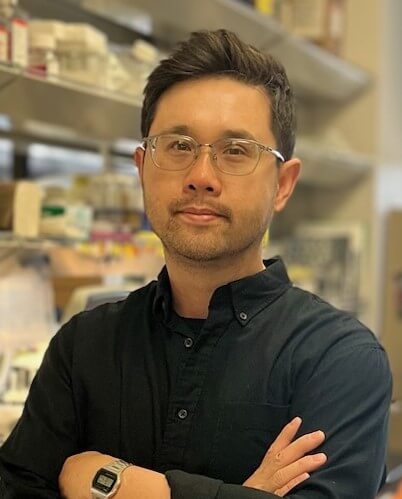
A scientist at The University of Texas at San Antonio was recently awarded two grants totaling more than $4.6 million from the National Institutes of Health to study how cells repair DNA to protect the genome, the set of genetic instructions within cells. The long-term goal of the research is to better understand the biology of cancer and identify new opportunities for therapy.
Justin Leung, PhD, associate professor in the Department of Radiation Oncology at the Joe R. and Teresa Lozano Long School of Medicine, received a $2.16 million Maximizing Investigators’ Research Award from the National Institute of General Medical Sciences and a $2.5 million research grant from the National Cancer Institute.
“Our cells are constantly repairing damaged DNA,” said Leung, who also works at the Mays Cancer Center at UT Health San Antonio. “We want to understand how that process works at a fundamental level and why it sometimes fails in cancer cells.”
The Maximizing Investigators’ Research Award supports Leung’s broader research program on chromatin biology and genome stability. The award will support a project to investigate how histone variants — specialized proteins that help package DNA inside cells — regulate DNA repair and maintain the structural organization of the nucleus.
The second research grant supports a project to study a family of enzymes known as RBR E3 ubiquitin ligases and the role they play in DNA repair. Leung’s laboratory discovered that this family of enzymes is an important regulator of how cells repair DNA double-strand breaks, the most harmful form of DNA damage. The project hopes to provide insight into why some cancers become resistant to treatments such as radiation therapy and poly ADP-ribose polymerase inhibitors.
“The Maximizing Investigators’ Research Award provides the flexibility to pursue ambitious and high-risk scientific questions, while the National Cancer Institute research award will allow us to conduct in-depth investigation on a novel class of enzyme in the context of DNA repair,” Leung said. “Our long-term goal is to define how chromatin-based signaling pathways orchestrate genome stability and to leverage that knowledge toward therapeutic advances in cancer.”
Leung’s laboratory is also developing innovative platforms and genetic tools to allow researchers to visualize DNA repair processes in living cells and map protein interactions at the site of damaged chromatin. His team is working in collaboration with several other institutions and disciplines including proteomics, biochemistry and genome stability.
In addition to the two new NIH grants, Leung is currently funded by the American Cancer Society and an R01 grant studying the DNA repair regulation in different cell cycle phases.