


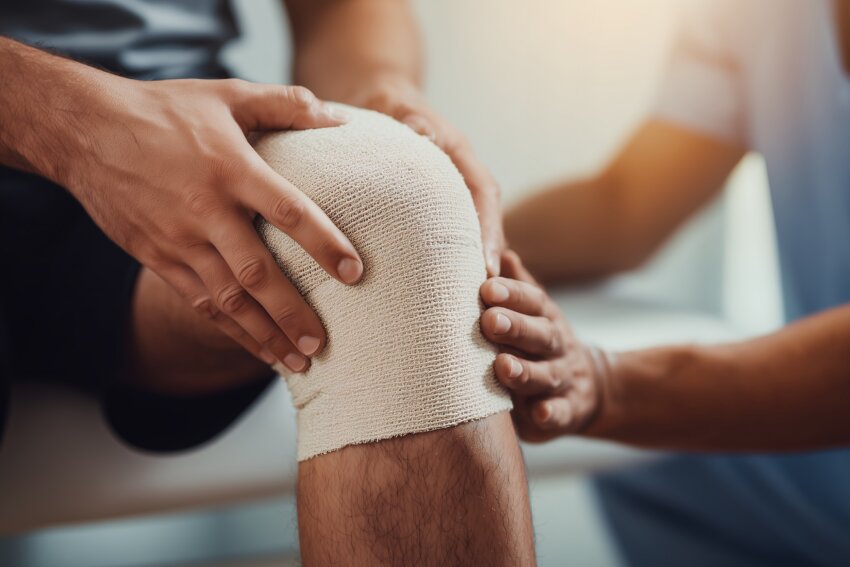
What began as a routine knee procedure quickly turned into a life-altering medical crisis for Jerry Sparrow, 59.
Sparrow received simple meniscus surgery at another facility, but post-surgery he developed a severe infection.
“It was a lot to go through, physically and emotionally,” Sparow said. “I spent months dealing with constant pain and trying different treatments. At one point, I couldn’t walk and was on crutches. There were times I thought I might lose my leg.”
For Sparrow, who works for CPS Energy, the situation was especially dire because his pain and immobility made it difficult for him to keep working.
By the time he was referred to orthopaedic surgeon Frank Buttacavoli, MD, and his team at UT Health San Antonio, the damage was severe.
“When they took imaging, they told me it looked like I had been in a car accident. There was essentially nothing left in the joint,” Sparrow said.
The infection had destroyed the cartilage in his knee and had to be treated in stages: first placing an antibiotic-loaded cement spacer to clear the infection, then later replacing it with a new knee implant.
“When Dr. B told me we could finally do the surgery, I felt like I was on cloud nine,” he said.
Buttacavoli explained that joint replacement is often necessary when the joint has deteriorated beyond repair.
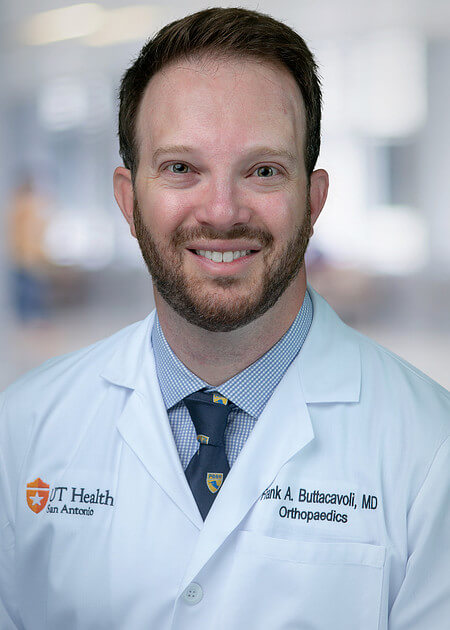
“Usually, it’s a level of arthritis where the patient essentially has no cartilage left. For the majority, it comes down to the joint no longer functioning well because the cartilage is gone. This patient had a severe case because of his infection, but deterioration due to arthritis, or more specific conditions, like rheumatoid arthritis, congenital defects or osteonecrosis, can affect anyone,” Buttacavoli said.
After his first successful knee replacement, the patient returned about a year later to address the second knee, which had deterioration due to osteoarthritis. The results were life changing.
“Before the surgeries, I just wanted to be able to stand without pain,” Sparrow said. “I didn’t realize how much I had been pushing through, but I had been gritting my teeth every day and missing out on life. Now I’m functional again. I’m back working again. I can ride my bicycle, ride my motorcycle, and I go to the gym regularly.”
Beyond the procedure itself, Sparrow said the support he received throughout his experience made a lasting difference.
“The care team made a huge difference,” Sparrow said. “I never felt lost. They communicated, worked together and made the process easy for me. I’m incredibly grateful to Dr. B and the whole team for everything they did for me because I feel like I got my life back.”
For Buttacavoli, outcomes like this are exactly why he chose his specialty.
“There’s a sense of immediate impact,” he said. “We help people return to a better quality of life than when they came in.”
For more information or to request an appointment or second opinion, please call 210-450-9300 or visit UTHealthcare.org/Ortho.