


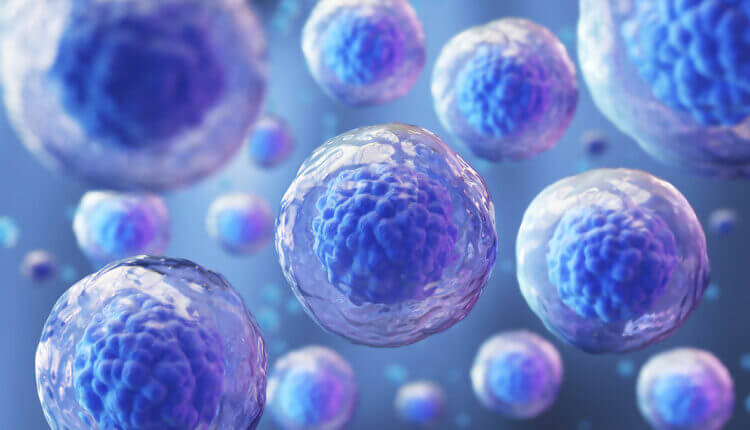
Like a busy restaurant kitchen, our cells depend on well-organized working spaces to assemble the “recipes” that keep the body healthy. When these spaces are disrupted, important functions like gene regulation and DNA repair can go awry, promoting diseases such as cancer and neurodegeneration.
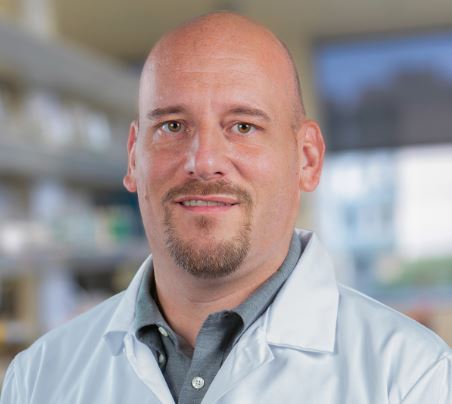
UT San Antonio scientist David Libich, PhD, associate professor in the Department of Biochemistry and Structural Biology at the Joe R. and Teresa Lozano Long School of Medicine and the Greehey Children’s Cancer Research Institute, recently received a five-year, $2.1 million Maximizing Investigators’ Research Award from the National Institute of General Medical Sciences to study how certain proteins form these organizational hubs and what happens when things do not go according to plan.
Inside biomolecular condensates
In the body, these working spaces are called biomolecular condensates. They form inside cells at the right place and time to carry out specific tasks. Rather than being enclosed by a permanent membrane, they are held together by weak, reversible interactions between proteins and nucleic acids that disperse when the job is done. When condensates fail to form, or form at the wrong time, essential cellular functions can be disrupted, promoting disease.
The role of “floppy” proteins
Libich has long been interested in a class of proteins called intrinsically disordered proteins, which do not fold into fixed shapes like most proteins. Once thought to be unimportant, scientists now recognize that these “floppy” proteins play key roles in many cellular functions and disease processes. They are also central to the formation of biomolecular condensates.
The composition and physical properties of these condensates directly influence which molecules they recruit and what reactions take place.
“This means that the material behavior of a condensate is not just a biophysical curiosity — it is a regulatory mechanism that cells use to control their most essential functions,” Libich said.
How condensates control cellular activity
Libich’s team will investigate how cellular signals trigger physical changes in condensates, allowing them to transition between processes such as gene regulation, DNA repair and RNA processing, as well as what happens when this communication breaks down.
Targeting EWS in cancer
The work will specifically focus on EWS, an RNA-binding protein involved in transcriptional regulation and RNA processing within condensates. In Ewing sarcoma, a devastating bone cancer that primarily affects children and young adults, part of the EWS gene fuses with another gene, creating an abnormal fusion protein. This fusion protein hijacks condensate processes, disrupting DNA repair and gene expression regulation, which can lead to tumor growth.
“By studying how normal EWS and its cancer-related fusion protein behave within condensates, we can learn how changes in protein disorder and condensate properties contribute to disease and potentially identify vulnerabilities that could be targeted therapeutically,” Libich said.
Investigating BRCA1 and DNA repair
The research team will also study the cancer-associated gene BRCA1 and its partner, BARD1. Mutations in this gene greatly increase the risk of breast, ovarian and other cancers. BRCA1 plays a central role in repairing a dangerous type of DNA damage known as double-strand breaks.
The team will examine how BRCA1–BARD1 is regulated during active gene transcription and how it moves between transcription condensates and DNA damage sites. By understanding how it is directed, researchers may gain new insight into why certain BRCA1 mutations are more harmful and identify new therapeutic targets.
Opening the door to new therapies
Libich said that uncovering the molecular rules governing condensate formation could open the door to an entirely new class of therapeutic targets. A predictive understanding of condensate function could reshape research into diseases linked to condensate dysfunction, including many cancers, amyotrophic lateral sclerosis, Alzheimer’s disease and other neurodegenerative conditions.
“Rather than targeting a single enzyme or receptor, we could potentially modulate the physical behavior of condensates themselves,” he said. “This could prevent harmful condensates from forming in cancer or restore normal condensate function in neurodegeneration.”
Supporting long-term discovery
“Condensate biology is a rapidly evolving field, and the ability to follow the science where it leads is what the Maximizing Investigators’ Research Award was designed to enable,” Libich said.
Unlike most traditional NIH awards that fund a specific project, Libich’s multi-year award supports his overall research program. This provides stability and allows the team to build on their findings and pursue bold, unexpected directions.
“The path from fundamental discovery to patient impact takes time, but it begins with asking the right questions at the molecular level. Every major advance in treating cancer, neurodegeneration and genetic diseases is built on this kind of basic research — and that is what this work aims to provide,” Libich said.