



Environmental stressors like jet lag, high-fat foods suspected as disease risk
Contact: Steven Lee, (210) 450-3823, lees22@uthscsa.edu
Content provided by Claire Kowalick
SAN ANTONIO, April 27, 2026 – Can jet lag cause more than just sleep loss? Do quick-grab, high-fat foods associated with late-night or rotating work shifts bring more than indigestion? Those circadian rhythm disruptors might also contribute to Alzheimer’s disease.
UT Health San Antonio, the academic health center of The University of Texas at San Antonio (UT San Antonio), was recently awarded a highly competitive Alzheimer’s Association research grant to investigate how such environmental stressors may contribute to an increased risk for the disease.
While Alzheimer’s is a highly heritable disease with about 60% of the risk coming from a person’s genes, the remaining risk is less well-studied and may, in part, come from environmental stressors. Sleep loss, for example, can change the amount of tau and amyloid in the brain. The aggregation of tau proteins and amyloid plaques are well-known hallmarks of Alzheimer’s disease and other dementias.
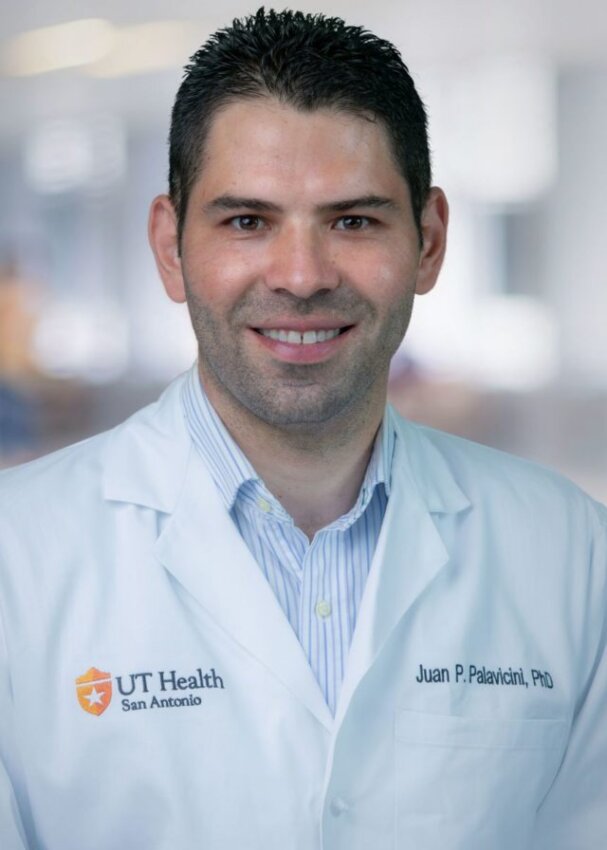
“We are trying to incorporate as many genetic variants and environmental stressors as we can to have a robust model that mimics late-onset Alzheimer’s disease, as opposed to other preclinical work that shows early onset, highly aggressive, non-physiological models,” said principal investigator Juan Pablo Palavicini, PhD, assistant professor in the Department of Cellular and Integrative Physiology in the Joe R. and Teresa Long School of Medicine, and a researcher with the Sam and Ann Barshop Institute for Longevity and Aging Studies, both under UT San Antonio.
The grant examining this gene-environment interaction begins this month and provides $200,000 to fund the study over the next three years.
Circadian disruption as an environmental stressor
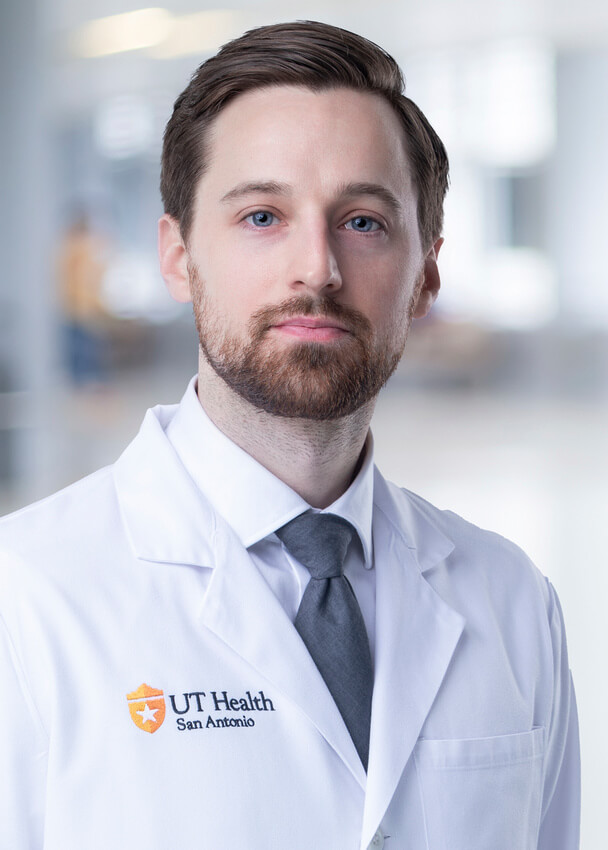
Palavicini is teaming with Kevin B. Koronowski, PhD, assistant professor in the Department of Biochemistry and Structural Biology in the Long School of Medicine and researcher with the Barshop Institute, to primarily study the effects of circadian rhythm disruption as an environmental stressor and its effects on human phosphorylated-tau proteins.
“In modern society, it’s difficult to reduce environmental stressors like disrupted sleep schedules and diet,” Koronowski said. “That is the whole point of our study. We don’t yet know all the potential consequences of this disruption.”
With Koronowski’s expertise in circadian rhythm, the team developed an earlier study funded by the William and Ella Owens Medical Foundation. A chronic jet lag condition was created in an animal model by shifting the light-dark schedule forward by eight hours twice per week.
“It is as if you traveled from Texas to Europe, from Europe to Australia and then back to Texas,” Palavicini said.
During that study, some mice started misbehaving and developing metabolic abnormalities, but the effects were not strong. For the upcoming study, the research team will incorporate changes to create more dramatic consequences of circadian rhythm disruption.
“A key adjustment will be to start the process in middle-aged subjects instead of younger ones to account for age-related resiliency and recovery capacity,” Palavicini said.
For the upcoming study, researchers will also provide a Western diet with higher fat and sugar content. Many clinical studies show that people who work rotating or night shifts tend to have lower-quality diets. In replicating actual human scenarios of circadian disruption, Koronowski said it makes sense to include dietary stress.
“This type of food falls perfectly into the big picture of what we are doing,” he said. “This shows the additional stress of an unhealthy diet that many people eat, the typical Western-style diet.”
The research team is also proposing a second aim of the study in which they will determine if a time-restricted feeding schedule rescues circadian disruption-induced metabolic abnormality.
In their previous study, the team noticed the chronic jet lag caused eating at all times of the day and night. In the upcoming study, they will have an automated system that only allows for feeding 12 hours a day.
Cause or effect?
“We are especially testing whether restoring metabolic rhythms while light is disrupted can prevent the progression of Alzheimer’s disease,” Koronowski said. “In the context of neurodegeneration, we still don’t know if circadian disruption is a cause or effect, so this study can help us determine that.”
Rather than only focusing on the genetic component, Koronowski said this study is a more holistic view of health and how loss of homeostasis in the body and misalignment of natural rhythms can contribute to disease.
“Night is a critical time for our brains because these proteins that accumulate, like tau and amyloid beta, get flushed out as we are sleeping,” Palavicini said. “The different stages of sleep, especially REM, are essential for memory consolidation. Disrupted sleep, even for one night, can alter the amount of tau and amyloid in the brain substantially.”
Findings from this study could help clarify how environmental stressors such as disrupted sleep and diet interact with genetic risk, offering new insight into how Alzheimer’s disease develops later in life.
Other researchers on the team include Qing Zhang, MD, a research scientist in Koronowski’s lab, and Andrea Gonzalez, a student associate in Palavicini’s lab.
UT Health San Antonio is the academic health center of The University of Texas at San Antonio (UT San Antonio), offering a comprehensive network of inpatient and outpatient care facilities staffed by medical, dental, nursing and allied health professionals who provide more than 2.5 million patient visits each year. It is the region’s only academic health center and one of the nation’s leading health sciences institutions, supported by the schools of medicine, nursing, dentistry, health professions, graduate biomedical sciences and public health that are leading change and advancing health-related fields throughout South Texas and the world. To learn about the many ways “We make lives better®,” visit UTHealthSA.org.
The Joe R. and Teresa Lozano Long School of Medicine at The University of Texas at San Antonio (UT San Antonio) is listed among U.S. News & World Report’s best medical schools, among the top 5% of universities globally for clinical medicine research and ranked as the third-highest medical school in Texas for medical research funding by the National Institutes of Health. The Long School of Medicine supports the university’s academic health center, UT Health San Antonio.
The Sam and Ann Barshop Institute for Longevity and Aging Studies at UT Health San Antonio is one of the world’s premier institutes dedicated to the study of age-related diseases. The Barshop Institute is the only aging-intensive research institute in the country to have four peer-reviewed designations: two National Institute on Aging (NIA)-funded centers (Nathan Shock and Claude D. Pepper centers), a testing site of the NIA-sponsored Interventions Testing Program, and a U.S. Department of Veterans Affairs Geriatric Research, Education and Clinical Center. UT Health San Antonio is the academic health center of The University of Texas at San Antonio (UT San Antonio).
Stay connected with UT Health San Antonio on Facebook, Twitter, LinkedIn, Instagram and YouTube.