


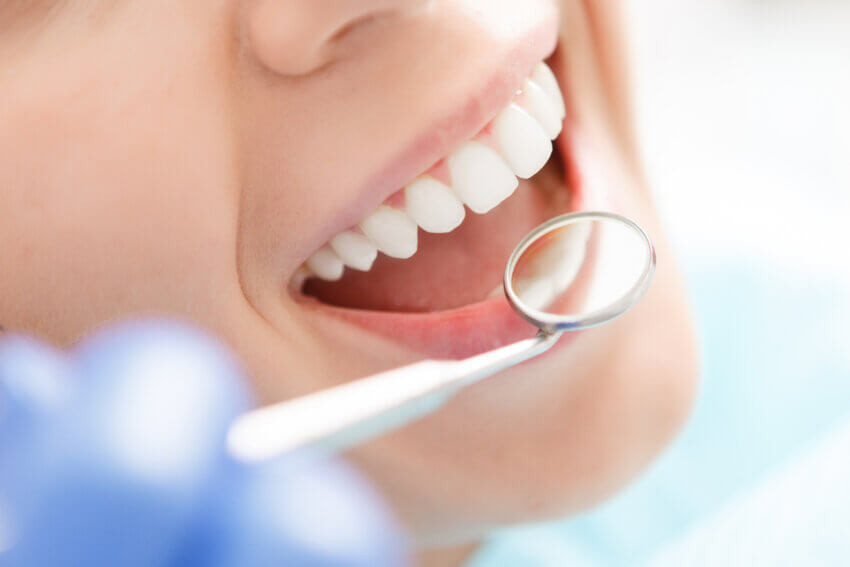
Understanding dentin regeneration pathways could help restore dental tissue
Contact: Steven Lee, (210) 450-3823, lees22@uthscsa.edu
Content by Claire Kowalick
SAN ANTONIO, Nov. 17, 2026 – If you have a damaged tooth, imagine if you could regrow it.
Researchers at The University of Texas at San Antonio Health Science Center are investigating how the body forms dentin, the hard tissue beneath tooth enamel, and how understanding this natural process could one day help regenerate dental tissue and repair damaged teeth.
Shuo Chen, MD, PhD, professor of developmental dentistry at the UT San Antonio School of Dentistry, studies the molecular mechanisms that regulate dentin formation and inherited dentin disorders. His research focuses particularly on dentin sialophosphoprotein (DSPP), a protein that produces specialized cells known as odontoblasts responsible for forming dentin.
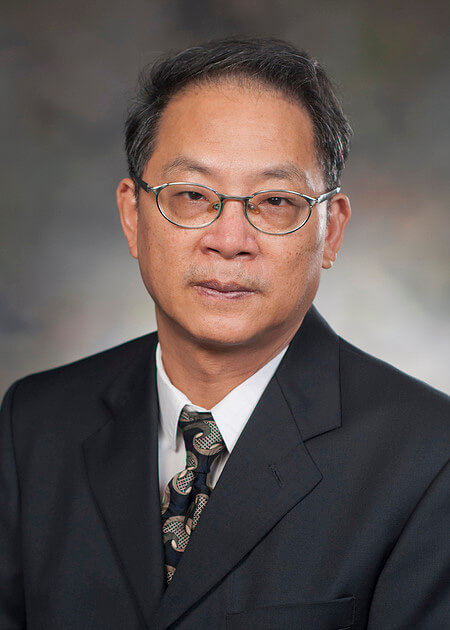
Chen recently received a five-year renewal of his National Institutes of Health (NIH) R01 research grant from the National Institute of Dental and Craniofacial Research (NIDCR). The funding will allow his research team to continue investigating the molecular mechanisms of dentin formation using animal models and to explore how these mechanisms might eventually be applied to repair damaged teeth.
The long-term goal is to establish a biological foundation for dentin regeneration and, ultimately, contribute to the development of “bio-teeth” by harnessing the body’s natural processes to restore tooth structure and function.
“We believe we could one day induce endogenous dental pulp cells or dental pulp stem cells (DPSCs) to proliferate and differentiate into odontoblasts, enabling them to produce new dentin to treat dental diseases such as dental caries,” Chen said, referring to treatment of tooth decay or cavities.
Understanding DSPP
DSPP plays an essential role in dentin formation. Mutations in the DSPP gene are associated with inherited dentin disorders, including dentinogenesis imperfecta, which can lead to translucent or discolored teeth, and dentin dysplasia, which causes misshapen teeth or teeth without roots.
After DSPP is produced, it is processed into two major protein components: dentin sialoprotein (DSP) and dentin phosphoprotein (DPP). DSP can undergo further processing to generate biologically active regions, or domains.
Chen’s research focuses primarily on DSP and the biological functions of its specific domains – including the molecular interactions within the DSP that regulate cellular behavior, with the aim of determining how these interactions contribute to dentin development and regeneration.
Chen said the new research builds on findings from the previous grant period, which advanced understanding of how DSP regulates blood vessel development and influences the differentiation of cells involved in dentin formation and regeneration.
Connection between blood vessels and dentin
The relationship between blood vessel development and dentin formation is an important component of Chen’s research.
The dental pulp, located within the tooth’s central chamber, contains blood vessels, nerve fibers, connective tissue and various cell populations that support tooth health. Blood vessels supply oxygen and nutrients that help maintain the living tissues inside the tooth.
Chen’s research suggests that DSP signaling may influence blood vessel development through interactions that can activate intracellular signaling that promote the development of cells involved in blood vessel formation. Understanding this mechanism could provide new insights into how the vascular environment supports dentin formation, tooth maintenance and tissue regeneration.
A step toward the “bio-tooth”
Chen’s research contributes to the broader goal of developing new strategies that harness the body’s own biological processes to repair, regenerate and restore damaged teeth.
Although the development of a fully functional biological replacement tooth remains a long-term goal, understanding the molecular mechanisms that regulate dentin formation is an important step toward that vision.
Read more:
https://news.uthscsa.edu/a-new-method-for-tooth-repair/
Related research:
Xu X, Fu J, Yang G, Chen Z, Chen S, Yuan G. Dentin sialoprotein promotes endothelial differentiation of dental pulp stem cells through DSPaa34-50-endoglin-AKT1 axis. J Biol Chem. 2025 Apr;301(4):108380. doi: 10.1016/j.jbc.2025.108380. Epub 2025 Mar 4. PMID: 40049415; PMCID: PMC11997338.
Xu X, Fu J, Yang G, Chen Z, Chen S, Yuan G. Dentin sialoprotein acts as an angiogenic factor through association with the membrane receptor endoglin. J Biol Chem. 2025 Mar;301(3):108279. doi: 10.1016/j.jbc.2025.108279. Epub 2025 Feb 6. PMID: 39922489; PMCID: PMC11910139.
The School of Dentistry at The University of Texas at San Antonio (UT San Antonio), ranked as the No. 1 dental school in Texas by the Blue Ridge Institute for Medical Research, offers 18 degrees and programs in both dentistry and dental hygiene, world-renowned faculty educators, a diverse student population, state-of-the-art clinical facilities and a distinguished research enterprise. Departments include comprehensive dentistry, developmental dentistry, endodontics, periodontics, predoctoral dentistry, and oral and maxillofacial surgery. Scientists collaborate with clinicians and research teams worldwide, and work across multiple medical and dental disciplines to find new treatments, advancing knowledge of oral health, biomaterials, cancer, pain and more. It supports the university’s academic health center, UT Health San Antonio. UT Dentistry, the clinical practice of the School of Dentistry, practices in the Center for Oral Health Care and Research, serving the general population. To learn more, visit https://www.uthscsa.edu/academics/dental.
Stay connected with UT San Antonio School of Dentistry on Facebook, LinkedIn and Instagram.