



While several types of cancer are declining across the United States, endometrial cancer is on the rise, especially in South Texas.
Endometrial cancer is the most common gynecologic cancer in the United States. This type of cancer is often diagnosed early and is highly survivable, but both endometrial cancer incidence and mortality rates have increased sharply over the past 20 years.
A new study published in July in Cancer Epidemiology, led by scientists at The University of Texas Health Science Center at San Antonio and the National Cancer Institute, found that the Upper-South region of Texas, which includes San Antonio and Bexar County, had the highest hysterectomy-corrected incidence of endometrial cancer in Texas and the largest increase over time.
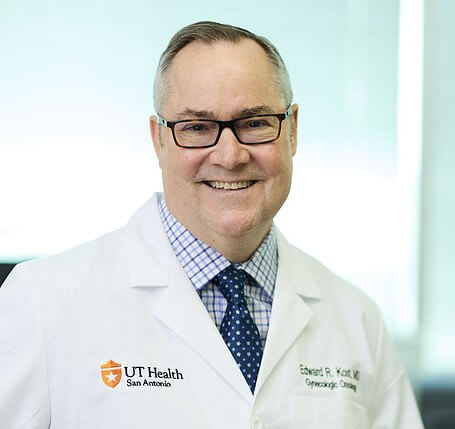
The study provides a comprehensive examination of regional differences in endometrial cancer incidence and survival across Texas. Principal investigator Edward R. Kost, MD, professor of gynecologic oncology in the Department of Obstetrics and Gynecology at the Long School of Medicine and gynecologic oncologist at the Mays Cancer Center at UT Health San Antonio, said the goal is to figure out why endometrial cancer rates are rising and which populations are most affected.
“The mission of the Mays Cancer Center is to reduce the burden of cancer in San Antonio, South Texas and beyond. To do that, we need to understand the cancers that affect our local population,” said Kost.
Rates highest in Upper-South Texas
The research team analyzed population-based data from 42,571 Texas women ages 20 to 79 with endometrial cancer who were diagnosed between 2000 and 2019 using the National Cancer Institute’s Surveillance, Epidemiology, and End Results (SEER) program. The analysis compared eight Texas Health Service Regions. The Upper-South region (Region 8), which includes San Antonio and Bexar County, had the highest hysterectomy-corrected incidence in the state and the largest increase over time, rising from 42.6 per 100,000 women in 2000–2009 to 53.8 per 100,000 in 2010–2019.
The study found that among women under age 50, Hispanic women had the highest incidence of endometrial cancer compared to other groups included in the study.
Among women under age 50, the statewide hysterectomy-corrected incidence rate was 12.4 per 100,000 among Hispanic women, compared with 8.9 among non-Hispanic White women and 5.6 among non-Hispanic Black women. In the Upper-South region, the early-onset incidence among Hispanic women reached 17.2 per 100,000.
The study also found that non-Hispanic Black women had higher rates of non-endometrioid tumors — the more aggressive form of this cancer — and poorer five-year relative survival.
“Part of our responsibility is to understand the cancer burden of the population we serve, and we found cancer disparities that are affecting our community,” said Kost.
Increased cancer rates in younger women
A major concern is the high rates of endometrial cancer in younger women in Texas.
“Our institutional tumor registry data from Bexar County suggest that approximately 25% of endometrial cancer patients were younger than 50 years at diagnosis, compared with approximately 15% nationally,” said Kost.
The most common treatment for endometrial cancer is hysterectomy, the surgical removal of the uterus. For young women who hope to have children, this treatment can mean losing the ability to carry a pregnancy.
For carefully selected women with early endometrial cancer who want to preserve fertility, more conservative treatment options are available. These can include progestin therapy, often with an intrauterine device, close endometrial surveillance with repeat biopsies and efforts to address obesity and other metabolic risk factors, diet modification, exercise and consideration of weight reduction with GLP-1 medications or bariatric surgery when appropriate.
Even when the cancer is successfully controlled and fertility is preserved, achieving pregnancy can present challenges. Many women may need to see a reproductive endocrinologist. The process can be grueling, expensive and not always successful.
“Wanting to have a child is one of the strongest desires a human can have. We do everything we can to preserve a woman’s ability to have children, but there are so many hurdles, and the primary goal is to get the cancer into remission,” said Kost. 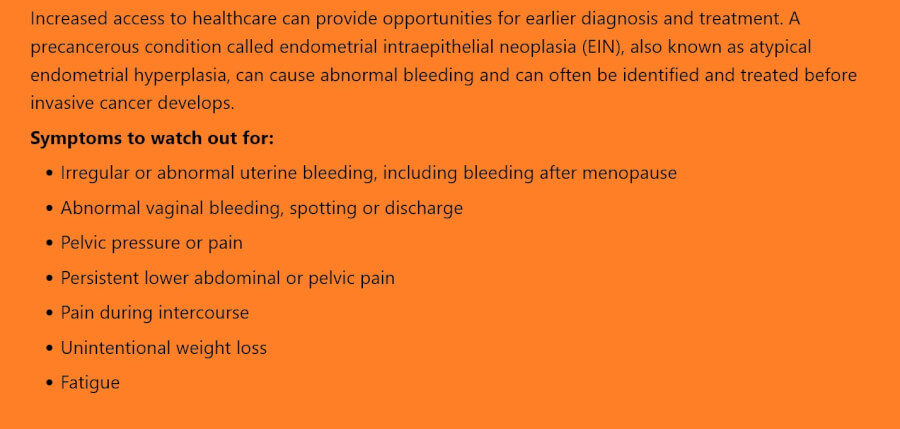
Finding the risk factors
Kost said the research team hopes to study population-level differences at a more granular level to better understand factors that may contribute to the observed disparities.
One of the greatest risk factors for endometrial cancer is increased body mass index (BMI). While scientists are still working to understand why endometrial cancer rates are increasing, rates of early onset endometrioid cancer have risen in parallel with increasing rates of obesity.
BMI and individual-level metabolic factors, such as obesity, diabetes, hypertension and fatty liver disease, were not available variables in the SEER data used for this study.
This initial study identifies the problem and the next step in the research is a closer look at metabolic factors, social determinants of health, geographic differences and other known risk factors in the Upper-South region to see where there is overlap with endometrial cancer rates.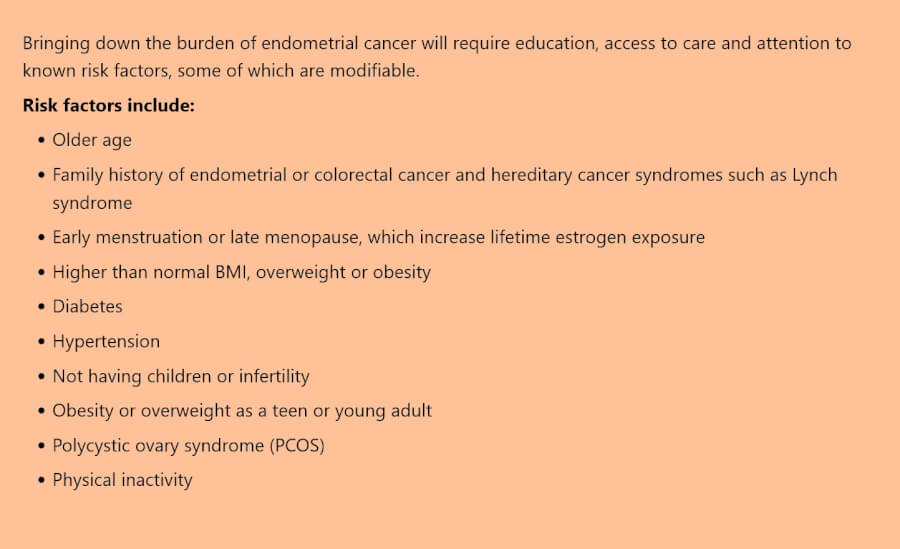
Geospatial analysis to connect the dots
Kost said the team plans to use geospatial analysis to examine how cancer rates overlap with various risk factors across populations.
“We want to understand how cancer incidence and potential risk factors overlap at a much more local level, including census-tract-level geography. That would allow us to focus community interventions in the areas where they may be needed most,” he said.
One of the strengths of the study is the collaborative team that brought together expertise in cancer epidemiology, population health, cancer biology and the gynecologic oncology group.
“Ultimately, the purpose is to move from identifying disparities to understanding their causes and developing better prevention, early detection, outreach and care,” said Kost.