


At 16, Jordynn Osorio stood before a room of researchers, families and supporters at The University of Texas at San Antonio’s Greehey Children’s Cancer Research Institute and recalled the frightened 10-year-old she had been when she was diagnosed with medulloblastoma, a cancerous brain tumor.
Now, she said, there is no evidence of the disease. She returned on Sept. 24 to the place she associates with the care and research that helped structure her recovery.
“It really means a lot to me, because I struggled so much when I had cancer and was going through my treatment,” Osorio said. Sharing her story is a way to give others confidence, she said.
Her testimony gave personal meaning to the day’s announcement: Hyundai Hope on Wheels presented two grants totaling $500,000 to support childhood cancer research at UT Health San Antonio, the academic health center and health system of The University of Texas at San Antonio.
The funding includes a $400,000 Hope Scholar Grant to pediatric oncologist Shafqat Shah, MD, and Manjeet K. Rao, PhD, professor and deputy director of the Greehey Institute, for their research on medulloblastoma. A separate $100,000 Impact Grant was awarded to pediatric oncologist Gail Tomlinson, MD, PhD, for research on childhood cancer survivorship.
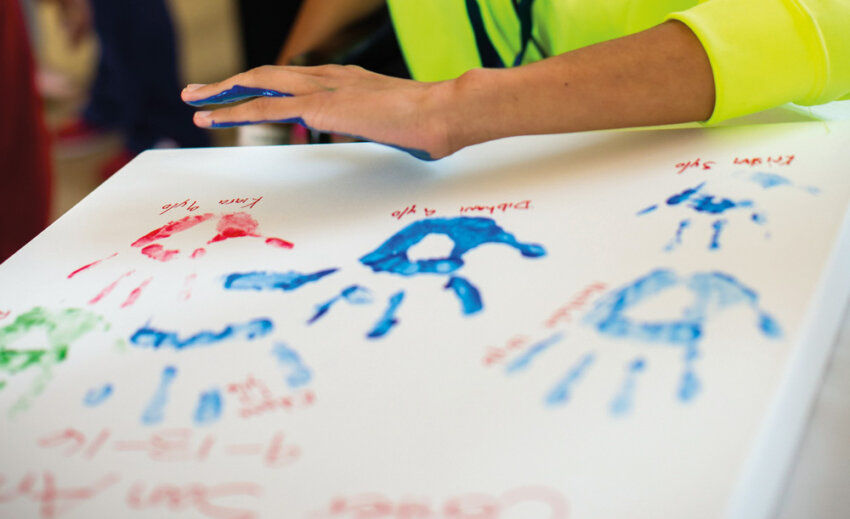
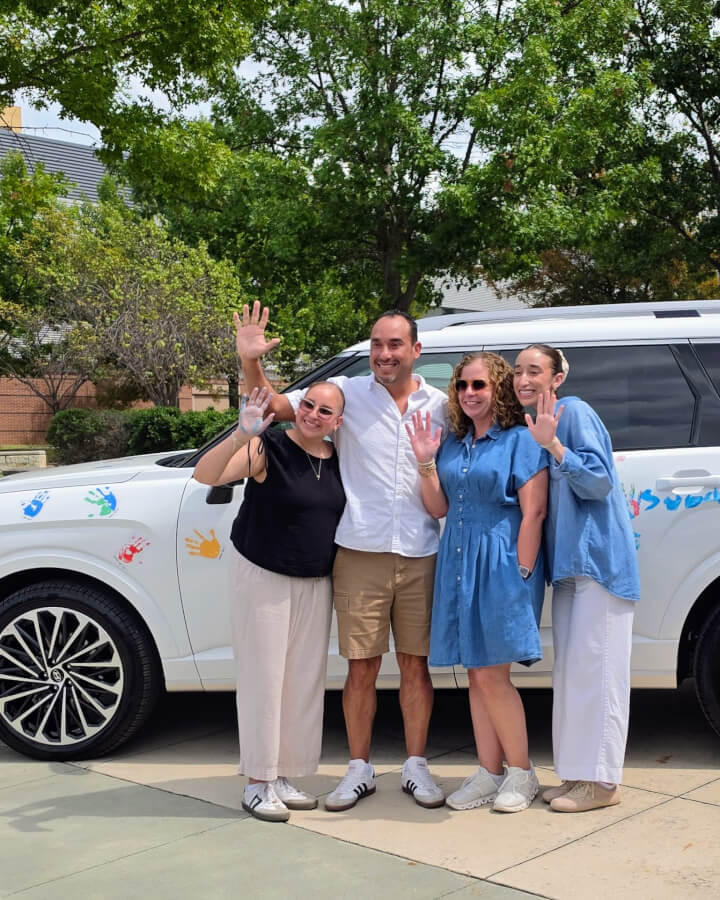
The grants were presented during a Hyundai Hope on Wheels Handprint Ceremony, where children affected by cancer placed painted handprints on a Hyundai vehicle, symbolizing their individual journeys and a shared hope for a cure.
The ceremony was also a chance for the families to express their gratitude to the people who helped them through surgery, radiation and chemotherapy. Speaking to attendees, Osorio described the uncertainty she faced during treatment and the support she found in her faith, family and care team.
“Staying here in Texas for my treatment and having Dr. Shah as my oncologist was one of the best decisions my family ever made. She has always made us feel comfortable, loved and cared for. When you’re a child going through cancer, there are so many things you don’t understand … having a doctor who makes you feel safe and cared for means so much.”
Life after the bell
Joel Gonzalez’s experience with medulloblastoma shows why the search for safer therapies matters even after treatment ends.
His mother, Sulema Gonzales, recalled taking Joel to the emergency room after he experienced dizziness and sensitivity to light following a fall in August 2025. After evaluation, the family learned he had medulloblastoma. Joel underwent radiation and chemotherapy, and his family celebrated when he rang the bell marking the end of treatment.
But his mother said, “it doesn’t just stop at the bell ringing.” Joel continues to attend medical appointments, and his family is helping him manage post-treatment challenges affecting his vision and balance.
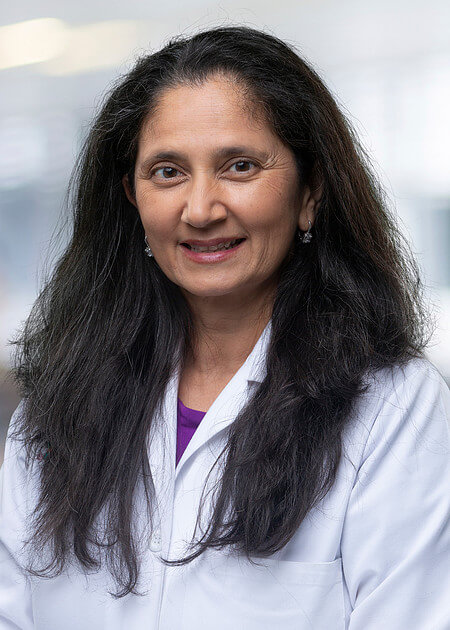
Shah said children who survive medulloblastoma may need care from multiple specialists long after treatment ends. She and her colleagues hope to develop therapies that cause fewer lasting effects, keeping access to innovative care close to home.
“One role UT Health San Antonio has is being able to access new agents directly through clinical trials,” Shah said. “Not every health system in this town provides that kind of early-phase therapy for patients who have a very high risk for recurrent diseases. I think it’s very meaningful for our families to be able to have options for advanced cancer close to home.”
Researching safer treatments
Rao said the grants will advance two approaches to treating this type of cancer.
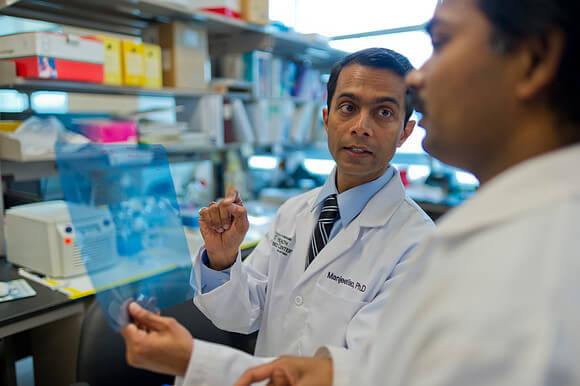
“We have discovered two promising ways to attack medulloblastoma,” he said. “One approach cuts off the tumor’s ability to use glutamine, an important nutrient that cancer cells need to grow and survive. The other uses an FDA-approved drug for high blood pressure to block a signal that helps the tumor grow, which could allow us to move this treatment toward clinical testing much more quickly.”
“We remain one of only two research institutes in the United States exclusively focused on pediatric cancer research,” said Patrick Sung, DPhil, director of the Greehey Institute. “It’s incredibly important that we work to find treatment regimens that are less toxic yet efficacious. Our investigators are making incredible progress.”
In the meantime, the Osorio family and the Gonzalez family share their stories as a way to encourage children and families still living through treatment.
“It is hard, and it is a struggle,” Osorio said, “but you can get through it … you are not alone.”