


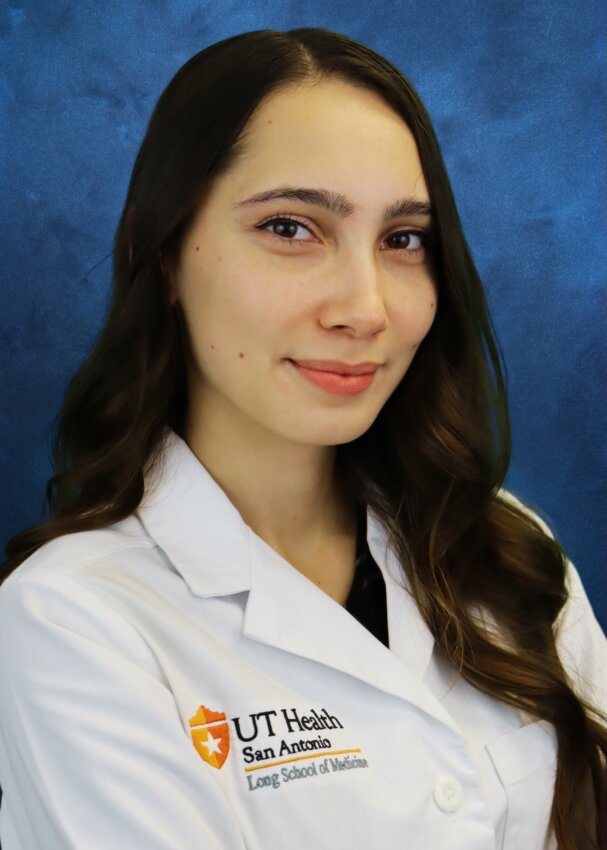
At 12 years of age, Maria Smereka-Hladio remembers accompanying her Ukrainian family members to the emergency room and other medical appointments to help facilitate communication with medical providers.
During those visits, she found herself interested in what the doctors were doing and how they made their diagnostic decisions.
By high school, Smereka-Hladio realized she had an affinity for the field of medicine and later attended and graduated from Pennsylvania State University with a pre-med mindset. But when it came time to apply to medical school, the first-generation student often felt like she was “playing darts blindfolded.”
She didn’t know any students in medical school whom she could call on for advice and didn’t have any physician contacts whom she could call on for job-shadowing experiences.
“There’s a lot of cold emailing, reaching out to people, trying to build connections,” Smereka-Hladio said.
But the persistent student forged ahead with her dream of becoming a doctor. After all, she had a role model with an exemplary work ethic: her mother.
As a young girl just starting school, Smereka-Hladio recalled her mom working three different jobs.
“She barely slept, but we always had food on the table. She always supported us and she would always really try to ensure our success academically. That was something that she stressed for me,” said Smereka-Hladio.
Inspired by her mother’s resilience in adapting to a new country, learning its language and navigating life with limited financial resources, Smereka-Hladio adopted the mindset that, “If she can overcome that, I can overcome anything. No matter how hard it gets, I know I can get through it.”
And she did.
At the end of her third year at Penn State, she applied to medical schools in her home state of Pennsylvania and beyond. During her fourth year, she interviewed and was accepted to the one school that stood out: the Joe R. and Teresa Lozano Long School of Medicine at The University of Texas at San Antonio’s academic health center.
Where education meets humanity
Smereka-Hladio found a welcoming, collaborative culture during her interview at the Long School of Medicine and was inspired by an environment where the students genuinely supported one another.
That sense of community has remained a defining part of her medical school experience, especially through the Veritas Program, where peer and faculty advisors have offered consistent guidance.
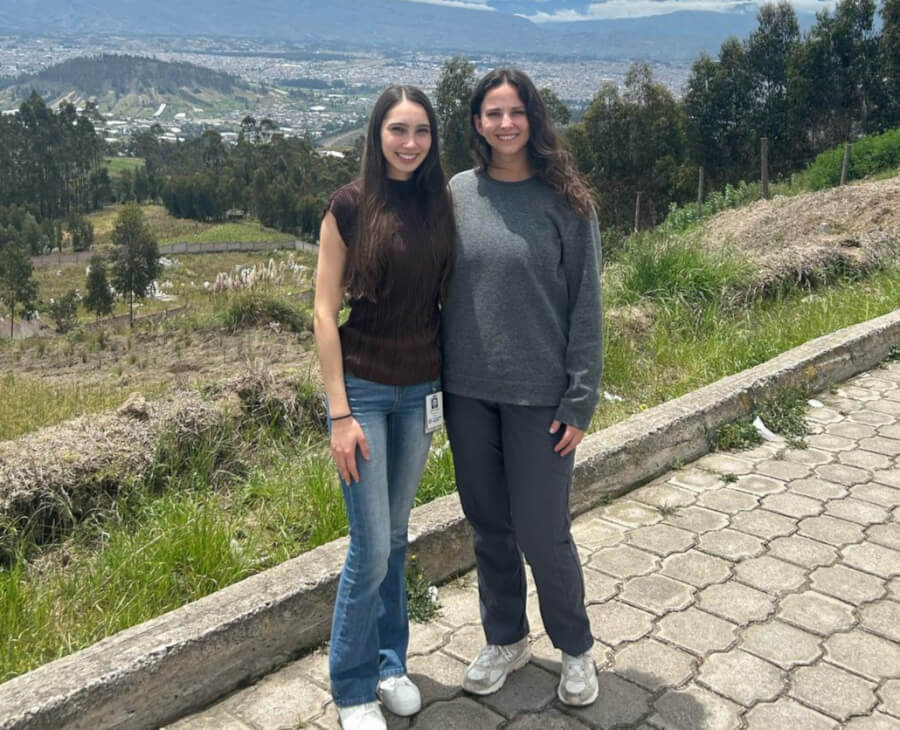
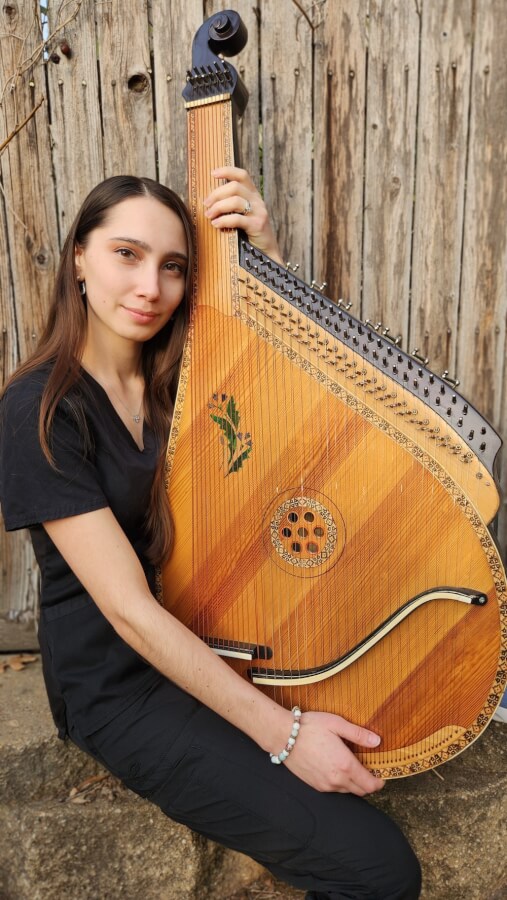
Beyond the classroom, the school has also made room for her to grow in meaningful ways through research, music and her participation in a four-week immersion program in Ecuador, where she shadowed physicians, strengthened her Spanish skills and connected with local communities.
“I just appreciate the fact that the school provides space for these pursuits while also providing an academically rigorous program.”
Guided by mentorship, shaped by experience
Now, as Smereka-Hladio prepares for her fourth year, clinical rotations in key areas have helped her focus on the medical specialty she hopes to pursue.
“I would not have known I wanted to do emergency medicine if it weren’t for the opportunity to [have my first clinical rotation as a third-year student in emergency medicine],” she said.
And when the time came to choose her specialty, having access to faculty advising was invaluable.
“We had a one-hour meeting scheduled, and we ended up sitting down for three hours, which really speaks to the culture here,” she said. “People are excited about what they do and very willing to help others, especially students.”
During her clinical rotations at University Hospital, she had opportunities to take an active role in patient care.
“When you’re doing a clinical rotation, you’re not just shadowing and watching people do things,” she said. “You’re learning the procedures. You’re part of patient care discussions.”
That hands-on role in patient care was one of the highlights of Smereka-Hladio’s training.
“I can do flashcards and practice questions on a condition repeatedly, but nothing teaches me as well or as effectively as the stories and experiences our patients carry and that I have the privilege to learn from,” she said.
A future of possibilities
With the same kind of resilience and fortitude she saw in her mother, Smereka-Hladio didn’t allow doubt or uncertainty to undermine her dream of studying medicine.
If she had questions, she’d find answers by being resourceful. If she needed to build her network or her experience in research, she did it.
“I think people in my shoes — like first-generation students — have to do more cold emailing and just randomly reach out and hope someone will take a chance on you,” she said, adding that going out on a limb can result in success.
“The first research lab that I ever joined was because I came up to the professor after being that student to sit in the front of the class answering every question [and asking], ‘can I join your lab?’ she said. “And it worked. And some of the research I’m doing now is because a physician decided to respond to my email and take the chance to work with me.”
As Smereka-Hladio thinks about her future, she’s hopeful about the possibilities that await and is excited to pursue emergency medicine. Perhaps her story is coming full circle from her childhood days of visiting the ER with her family members — curious and enamored with the prospect of making lives better through medicine.
Looking back on her lack of connections and inexperience with medical school applications, she has a hopeful message to aspiring first-generation medical students.
“A lot of first-generation students struggle with imposter syndrome and doubt, and I would say to not let your background be the limiting factor to your success or to achieving your dreams,” Smereka-Hladio said. “You deserve to be here. You deserve to be in medical school if that’s what you aspire to do. If you aspire to be a physician, you will. You have earned your spot, wherever you are. And, I would say that because of the experiences [as a first-generation student], you’ve learned resilience and time management, things that are going to make you a great doctor.”