

In the race to solve Alzheimer’s disease, scientists find more needles in the haystack

April 20, 2022

Thanks to international collaboration, more genetic variations for Alzheimer’s disease are known today than ever before. The list of gene variants recognized for late-onset Alzheimer’s grew from one in 2009 to 40 in 2022. This month, scientists published a list of 75, some of which are considered as prime drug targets. Drug development is underway.

Studies compare best ways to treat wide-neck aneurysms

February 14, 2022

Microsurgery with clips is weighed against coils, stents deployed via catheters. Contact: Will Sansom, 210-567-2579, sansom@uthscsa.edu SAN ANTONIO (Feb. 14, 2022) — Aneurysms are weak, bulging portions of blood vessel walls. These blood-filled sacs resemble balloons in structure and have necks like balloons. Some aneurysms have larger necks and are called “wide-neck” aneurysms. These aneurysms, identified […]

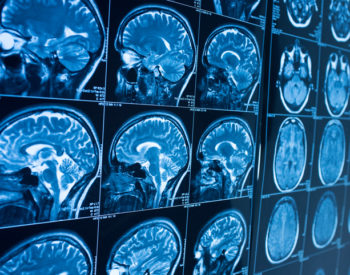
Head x-ray, brain in MRI


In the quest for a TBI therapy, astrocytes may be the bull’s-eye

February 9, 2022

Treatment could aim to raise levels of a neuroprotective molecule, studies hint. Contact: Will Sansom, (210) 567-2579, sansom@uthscsa.edu SAN ANTONIO (Feb. 9, 2022) — Growing evidence suggests that traumatic brain injury (TBI) is an important risk factor for developing Alzheimer’s disease and dementia. But to date, effective therapies aren’t available for preventing or treating TBI-induced […]

Neuron concept art


Autism-linked gene, if deleted, results in less myelin

December 20, 2021

Mice missing one copy of the Tbx1 gene exhibit slower cognitive processing. Contact: Will Sansom, (210) 567-2579, sansom@uthscsa.edu SAN ANTONIO (Dec. 20, 2021) — Myelin, a sheath of insulation around nerves that enables electrical impulses to efficiently travel through the central nervous system, is diminished in mice that have a gene deletion associated with autism […]

Picture of nerves


Visuals increase attention. Now science explains why.

December 17, 2021

Chemical’s release in brain tied to processing of imagery, cells’ activation. Contact: Will Sansom, (210) 567-2579, sansom@uthscsa.edu SAN ANTONIO (Dec. 17, 2021) — “Look at me!” we might say while attempting to engage our children. It turns out there is a neurochemical explanation for why looking at mom or dad actually helps kiddos pay better […]

Image of cute baby looking at mama