



The University of Texas at San Antonio’s School of Nursing is one of eight Texas universities and colleges to receive grant funding through the Nursing Innovation Grant Program to support innovative prelicensure educational programs for nursing students and expand healthcare workforce capacity across the state. The school will receive $716,174 in funding through a two-year grant that began Sept. 1 and ends Aug. 31, 2028, to develop and implement a novel competency-based nursing curriculum.
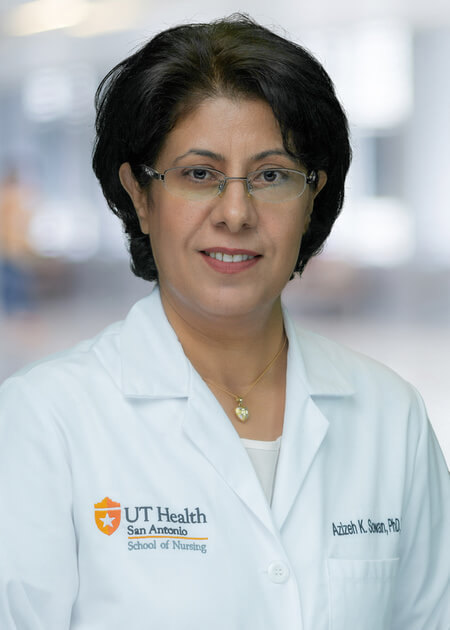
The grant will strengthen the school’s educational research and build faculty expertise in competency-based education (CBE) through a Faculty Development Academy, said Azizeh K. Sowan, PhD, RN, FAAN, professor and associate dean for the school’s strategic initiatives. Faculty will have an opportunity to participate in workshops, have access to educational resources and expert guidance, and work one on one with consultants and CBE and Objective Structured Clinical Examination.
Through the academy, faculty will learn to design, implement and evaluate competency-based curricula. The grant will also support 16 faculty members in pursuing certified nurse educator credentials, expanding their teaching expertise and creating additional opportunities for educational leadership, Sowan said.
“What comes with a certified nurse educator certificate is education innovation, evidence-based teaching, more efficient teaching strategies and expertise in curriculum development, instructional design and student assessment,” Sowan said, adding that having more educators certified will enhance the school’s teaching capacity, promote educational excellence and support improved student learning outcomes.
The grant funding will also support the development of a competency-based artificial intelligence predictive model to identify student learning gaps, forecast competency trajectories and detect instances in which students may need more support with their courses.
“We are hoping to build a model that understands where a student is stuck and where the majority of students need support resources,” Sowan said. “Then, we can identify student needs early in the process and provide those resources before students reach the point where they experience significant academic difficulties.”
The model will walk nursing faculty and leaders from a student’s starting point to the student’s graduation and even after graduation,” Sowan said, adding that the school is in the process of developing partnerships with three San Antonio health systems to provide feedback on how students perform in professional settings based on the school’s competency-based education.
“We plan to track our graduates who are employed after graduation within those healthcare systems to see how they’re doing and determine if our competency-based education was really successful in transitioning them to the professional role of being a nurse,” Sowan said.
Building an AI predictive model through interprofessional collaboration
To build the AI predictive model and provide a full evaluation of all project activities, the School of Nursing will partner with UT San Antonio colleagues Anthony Rios, PhD, associate professor, information systems and cyber security at the College of AI, Cyber and Computing and Ashwin Malshe, PhD, associate professor of marketing at the Carlos Alvarez College of Business.

“The basic idea here is to ultimately improve the performance of nursing school students,” Malshe said. “One interesting aspect of it is that this project will also involve creating a dashboard for performance tracking.”
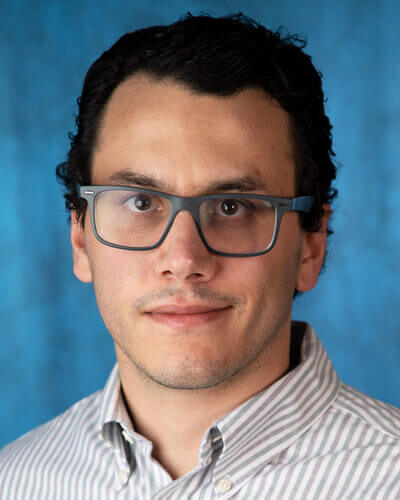
Rios will contribute his expertise in artificial intelligence systems and large language models to develop the AI-enabled dashboard and predictive capabilities that will help nursing faculty and leaders visualize student competency progression, identify learning gaps and forecast competency trajectories. Malshe will lead the statistical analysis of data across the project to evaluate outcomes and identify meaningful patterns in student performance and competency development. Together, their complementary expertise will help translate complex project data into accessible insights for nursing leaders, supporting data-informed decision-making, targeted student interventions, curriculum improvement and continuous quality assurance.
Another important aspect of the project will be governance and monitoring, Malshe said.
“Once you build a model and you put that in production, it’s not building it once and then you forget about it,” Malshe said. “It needs modifications, it needs these bias corrections, and with time, things change. There could be a drift in the way new students are thinking and learning; with AI education in general, there will be changes.”
The interdisciplinary partnership will be beneficial for all involved, Rios said.
“It’s very exciting to be working with the School of Nursing,” Rios said. “We’re bringing together expertise from a lot of different colleges and I think that will be very useful from a future research standpoint as well as giving our faculty and community partners access to different expertise from across the university.”