



For nearly two years, the simple act of breathing had become something Alison Sendejo had to actively think about.
Walking through the grocery store could leave her gasping. Going upstairs in her Corpus Christi home required stopping midway to catch her breath. She quit going to the gym. Simply leaving the house could feel like too much on bad allergy days. Her family couldn’t help but notice her struggle.

“My kids would stop me and say, ‘Mom, catch your breath,’” Sendejo recalled. “And I’d tell them that I’m fine. I just can’t catch my breath. This is how I breathe all the time.”
Eventually, the struggle began separating her from the people she loved. Her mother became anxious hearing her breathe. Friends and other family members worried. Sendejo began avoiding gatherings altogether, concerned her wheezing and gasps for breath would alarm others.
“I often felt alone and secluded from my family,” she said.
Compounding her frustration, Sendejo didn’t have an explanation for why she couldn’t breathe.
She saw multiple providers, underwent testing and tried different treatments as physicians searched for a cause. At different points, she was treated for asthma and possible chronic obstructive pulmonary disease (COPD), but the medications weren’t solving the problem.
Eventually, pulmonary testing showed her lungs were functioning normally. A local otolaryngologist, or ear, nose and throat (ENT) specialist, then discovered a problem in her airway and referred her to UT Health San Antonio for further evaluation.
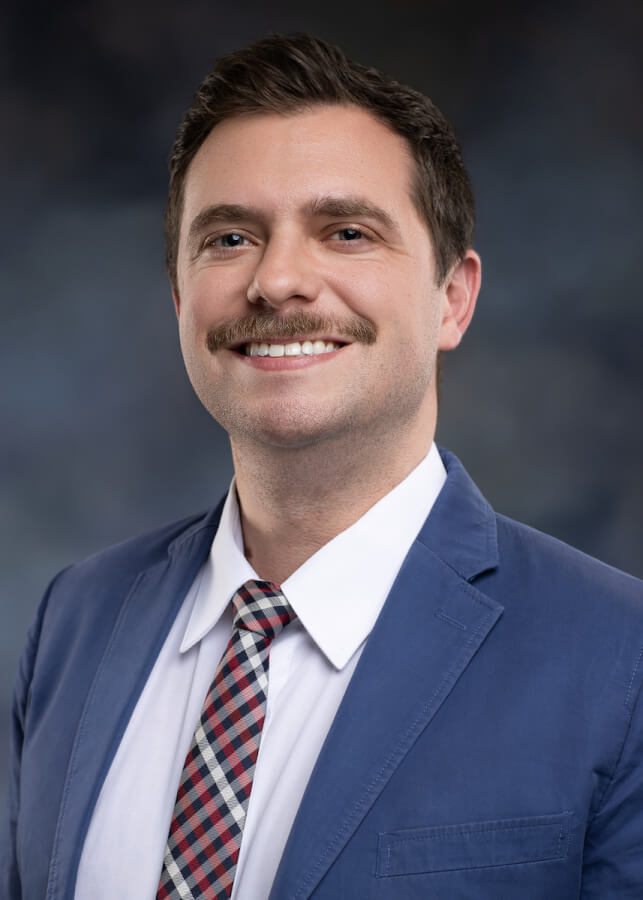
There, the team at the UT Health San Antonio Voice Center confirmed Sendejo had subglottic stenosis, a narrowing of the airway below the vocal cords caused in her case by bands of scar tissue. She ultimately came under the care of Jake Morgan, MD, a fellowship-trained laryngologist at UT Health San Antonio, who told her there was a path forward.
Hearing that brought long-awaited relief, Sendejo said.
“Just the comfort in knowing that they were willing to treat me and said, ‘I can fix this. I can take care of you. We’re going to get you breathing better’ — that was such a relief,” she said. “I wanted to hear that for so long.”
Finding the source of the problem
Airway stenosis can be difficult to recognize because its symptoms can resemble those of more common respiratory conditions.
“What happens in general with airway stenosis, no matter what the underlying cause is, is the airway slowly gets tighter,” Morgan said. “If you imagine you’re breathing through a smaller and smaller tube — the difference between a normal straw versus a coffee straw — you’re going to feel more resistance.”
Patients may have difficulty breathing during activity or even at rest. Some, as in Sendejo’s case, develop labored, noisy breathing.
Diagnosing the condition generally requires flexible laryngoscopy, a diagnostic procedure typically performed by an ENT physician in clinic using a small scope that goes through the nose and looks closely at the airway, including the subglottis immediately past the vocal folds.
At UT Health San Antonio, Morgan and an interdisciplinary team, led by Director Z. Mike Yang, MD, care for patients with complex conditions affecting the voice, airway and swallowing. The team’s experience with a high volume of airway conditions helps its specialists recognize conditions that can otherwise be difficult to identify.
“We have familiarity in knowing when to look a little bit closer,” Morgan said.
The pattern of scarring in Sendejo’s airway suggests an autoimmune cause, Morgan said, although determining the underlying cause can be complicated. Her care continues to include evaluation and monitoring.
At the time, however, the most immediate priority for both Morgan and Sendejo was to improve her airway.
Preparing for treatment
Treating Sendejo’s airway required specialized equipment, surgical expertise and close coordination among Morgan, anesthesiology and the operating room team at UT Health San Antonio Multispecialty and Research Hospital.
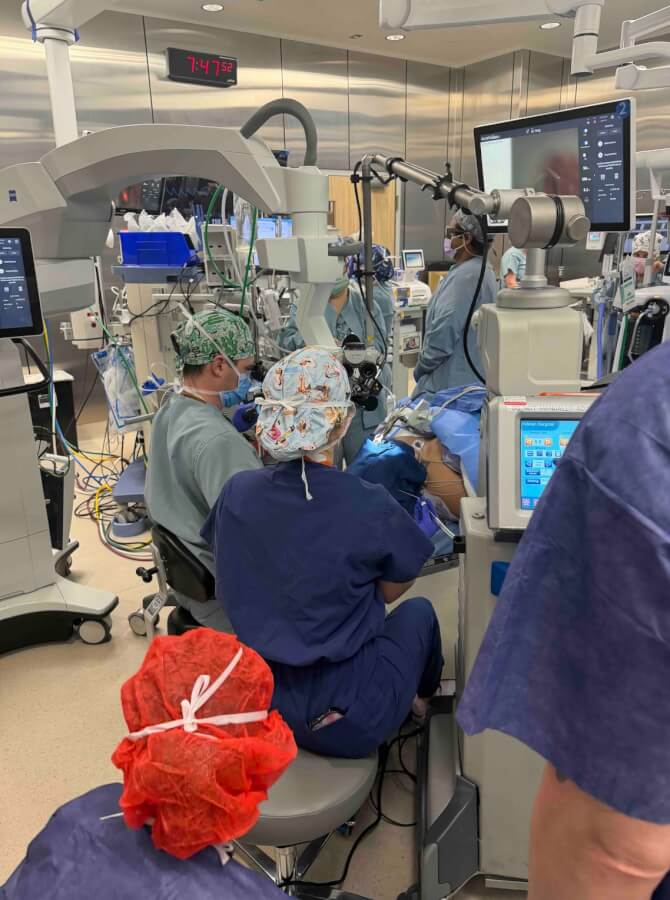
During the procedure, Morgan would use a CO2 laser to make precise cuts through the scar tissue narrowing Sendejo’s airway, inject a steroid to help reduce inflammation and scar formation, and use a balloon to expand the narrowed area.
Airway surgery adds another layer of complexity because the surgical and anesthesia teams are working in the same critical space. A traditional breathing tube used to ventilate a patient during surgery would obstruct the very area Morgan needed to reach.
Instead, the anesthesia team used jet ventilation to deliver small bursts of air through the laryngoscope while Morgan operated.
“When you don’t have definitive control over the airway, you need to be able to respond in a split second if a patient’s condition changes,” Morgan said.
Because this complex airway procedure was to occur at the recently opened hospital, Morgan wanted to ensure the specialized equipment was in place and every member of the team knew precisely what to expect before Sendejo entered the operating room.
The week before her surgery, he brought the surgical and anesthesia teams together for a dry run. Without Sendejo present, they rehearsed the procedure from beginning to end — positioning the patient, exposing the airway, initiating jet ventilation, using the laser, dilating the stenosis and more. Even anesthesiologists who weren’t scheduled for Sendejo’s surgery participated to become familiar with the procedure.
“It’s not just myself. It’s not just the surgical team,” Morgan said. “It’s the anesthesiologist who I collaborate with in these cases. It’s the entire OR team … we have to make sure everyone is on the same page before we even touch our patient.”
Morgan called Sendejo afterward to tell her how the rehearsal had gone and that the team was ready to proceed.
That close communication had become another source of reassurance for Sendejo. While waiting for surgery, she could message Morgan and his team directly through the UT Health San Antonio’s MyChart app with any questions or concerns she was having.
“If I was struggling, I was able to communicate with them about anything that I was struggling with,” she said. “They all were very, very patient, very understanding and very supportive.”
‘I can breathe’
All that preparation resulted in something many people take for granted, according to Sendejo.
When she woke up from surgery, she could breathe.

“I felt the instant relief of, yes, I can breathe,” she said.
Soon, she was thinking about everything she wanted back, such as going to the gym, lifting weights, carrying her granddaughter and simply walking upstairs in her own home.
Morgan could hear the difference.
“Seeing Alison after surgery and just hearing how much better she sounded was such a special moment for both of us,” he said.
Before Sendejo left the hospital, Morgan found her in the lobby. After the months they had spent working toward that moment, physician and patient greeted each other with a hug.
“It was just so nice to get to that point after so much work,” Morgan said.
The combined expertise that changed Sendejo’s life isn’t available everywhere. Her journey illustrates why expanding access advanced airway care to South Texas matters.
Procedures like hers require more than specialized surgical training. They depend on experienced anesthesia and operating room teams working alongside surgeons, as well as specialized equipment such as operative microscopes, lasers and instruments designed to work within the airway. That combination of expertise and technology isn’t offered in every community, meaning patients with complex airway conditions used to travel out of the region for treatment.
Together, the UT Voice Center and UT Health San Antonio Multispecialty and Research Hospital bring those capabilities together, expanding access to advanced airway care for patients across South Texas.
“What it means to be able to offer this level of care is that patients don’t have to be left in the dark about what’s going on in their airway,” Morgan said. “They’re able to get the care that they need without having to travel across the country or get on an airplane.”
Now, instead of planning her days around breathing, Sendejo has returned to the parts of life she had thought were lost.
“Everything in life was a struggle,” she said. “So now I’m getting to experience everything in life again and being able to breathe through it all.”
The experience has changed the way she thinks about something most people rarely notice.
“How precious taking a breath is — you don’t understand until you can’t,” she said. “Every breath is precious.”
Learn more about UT Health San Antonio Multispecialty and Research Hospital here.