



For nearly two decades, Carlos Morales managed the pain.
As an interventional cardiologist, he spent years standing for long hours in a cardiac catheterization laboratory while osteoarthritis slowly wore away the cartilage in both knees. He relied on medications and injections to stay active, postponing surgery until his retirement finally gave him the time to focus on his own health.
When that time came, Morales did what many physicians do. He asked another physician whom they would trust with their own care.
His doctor recommended Frank Buttacavoli, MD, orthopaedic surgeon at UT Health San Antonio, the academic health center and health system of The University of Texas at San Antonio.
Within weeks, Morales underwent robotic-assisted knee replacement surgery at UT Health San Antonio Multispecialty and Research Hospital.
The experience, he said, was far different from the stories he had read online from patients who went elsewhere.
“The UT Health San Antonio team made things very simple,” Morales said. “The appointments were always on time. Everything was flawless.”
Just hours after surgery, he was walking. Within weeks, he no longer needed assistance from a walker or cane.
Today, he walks the neighborhood with his wife each morning, rides his bicycle daily and has lost over 40 pounds.
“I couldn’t even walk to my mailbox before,” Morales said. “Now I’m walking three miles a day and biking five miles without any problems.”
Stories like Morales’ support an important message, according to Buttacavoli.
“Where patients begin their orthopaedic journey can make a meaningful difference,” he said.
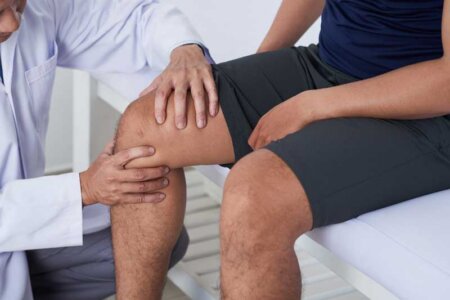
Expertise beyond routine care
There’s often a perception that orthopaedic surgery is simply treating broken bones or replacing worn-out joints.
In reality, orthopaedic care has become increasingly specialized.
At UT Health San Antonio, fellowship-trained physicians focus on specific areas such as spine, sports medicine, hand, foot and ankle care, joint reconstruction and more. The practice also serves as the region’s only academic orthopaedic program and receives referrals from throughout South Texas for the area’s most challenging cases.
“Every orthopaedic condition is different,” Buttacavoli said. “That’s why we’ve built a team of physicians who each focus on a specific area of the body. If you come in with a broken shoulder, you get our shoulder doctor. If you come in with a broken pelvis, you get our pelvis specialist.”
That level of specialization benefits patients seeking routine procedures just as much as those facing complex conditions.
When patients need another option
Not every patient starts their orthopaedic journey with UT Health San Antonio.
Some arrive after developing complications from procedures done elsewhere.
For years, Krischina Sutherland lived with worsening pain caused by multiple failed joint replacements and advanced arthritis.
Her right hip had already been revised twice before she visited UT Health San Antonio, where Buttacavoli treated an infection, reconstructed the joint and later developed a staged surgical plan to restore her mobility.
After returning home from surgery, her family fully expected she would still need assistance getting into the house.
“They asked if they needed to get the wheelchair,” Sutherland recalled. “I said, ‘Nope, I’m going to walk into the house.’”
She later threw the unnecessary wheelchair into the barn.
The advantage of getting it right the first time
Revision surgery remains an important part of the UT Health San Antonio orthopaedic program.
But physicians said their ambition is helping patients receive the right care before problems become difficult to treat.
“The reality is that the same fellowship-trained specialists who care for the region’s most complex orthopaedic conditions are also here for patients seeking their very first evaluation or procedure,” said Robert H. Quinn, MD, professor and chair of UT San Antonio’s Department of Orthopaedics. “Our goal is to help people receive the right treatment from the very beginning.”
That means evaluating patients through an integrated team that includes orthopaedic subspecialists, imaging, rehabilitation and, when appropriate, offering access to innovative technologies or clinical trials.
For a patient like Frank Morrill, that translated to accessing a clinical trial for a treatment option designed to delay or avoid joint replacement surgery altogether.
Rather than moving directly to total knee replacement after an injury, Morrill became one of the first patients to receive the MISHA knee system, an implant designed to reduce pressure on the knee while preserving the joint without invasive surgery.
The advanced treatment has allowed him to return to yoga, dancing and chasing his grandchildren.
“Essentially, I’ve got my knee back,” Morrill said. “The technology is really amazing.”
Choosing care with confidence
Morales knows his other knee will eventually need replacement. And when that time comes, he said his plan is set.
During a single visit, Morales completed imaging, reviewed the results with Buttacavoli, underwent preoperative testing and scheduled his surgery. After surgery, physical therapists came to his home with the equipment needed for his recovery. He said the coordinated experience removed much of the stress surrounding such a major operation.
“Everything was just so simple for me last time. I know exactly where I will go for my other knee,” Morales said. “I have an excellent doctor with a good team. That, and a lot of discipline on my part, is why my recovery was a piece of cake.”
To learn more about UT Health San Antonio orthopaedic care, visit uthealthcare.org/ortho.