


Brooke Heche was only 12 years old when she came face to face with death — and it changed everything.
What started as a mysterious bacterial infection quickly escalated into a life-threatening crisis that placed her in a pediatric intensive care unit as her organs began shutting down one by one. Her hair fell out, her vision failed and her legs became too weak to carry her. Her body was fighting septic shock, so for weeks, the world Heche had known shrank to the size of a hospital bed with the rhythm of monitors and the faces of strangers in scrubs moving through her room with quiet, steady purpose.
Those strangers, she learned, were nurses.
“You’re not spending a lot of time with doctors,” she recalled. “You’re spending the majority of the time with the nurses.”
Heche watched them work. Not just the clinical work of managing drips and charting medical records, but the human work of being present for others, of making a frightened child feel seen inside a body that seemed to turn on her. By the time Heche walked out of that hospital, having relearned how to do so, she already knew what she wanted to do with her life. “Nurses are warriors,” she said. “They literally fought for my life.”
That early reckoning with mortality and vulnerability, with the profound power of compassionate presence, became a quiet, internal engine of everything that would soon follow.
Two callings
Heche grew up in Pierceton, Indiana, a town so small that finding a military recruiter meant driving an hour to the nearest office, but she made the drive. Two callings were converging in her, a pull toward nursing and a pull to commit to something greater than herself, and she wanted to know if they could be answered together. She found that they could. The U.S. Air Force’s Nurse Enlisted Commissioning Program, known as NECP, is designed for taking enlisted service members and sending them to nursing school, with the understanding that their newly acquired skills will one day be in service to their country.
She joined in 2018 as a young woman who recognized her own potential for growth. “At 18 years old, I felt there was a lot of room for me to grow, so I was OK with developing and maturing a little bit. I was like, ‘OK, Air Force, help me grow up.’” The Air Force obliged and sent her to San Antonio.
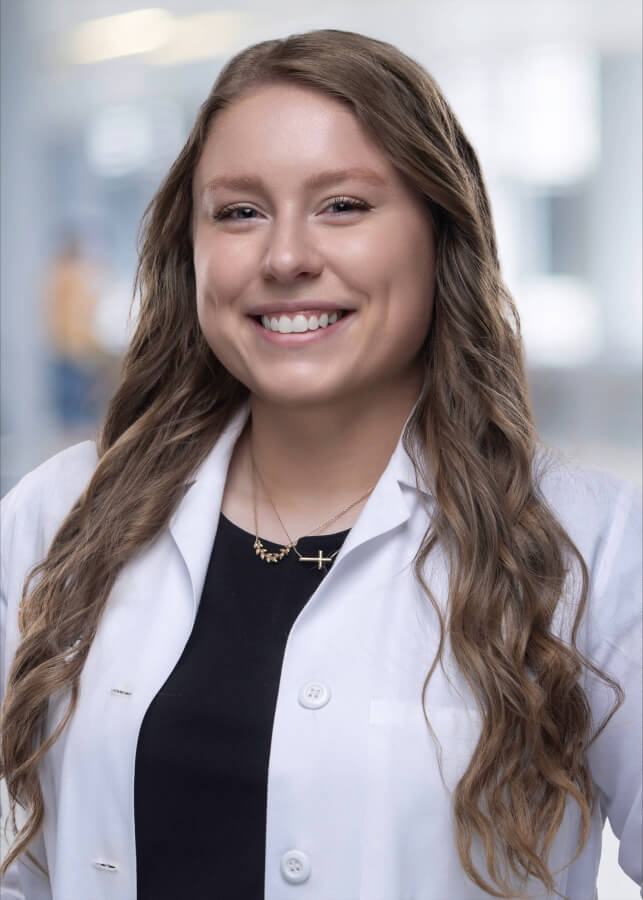
Today, Staff Sergeant Heche is completing her Bachelor of Science in Nursing at The University of Texas at San Antonio School of Nursing, where she is set to graduate with the Class of 2026. Her military home during her training has been the Air Force ROTC Detachment within the university. Come August, she will commission as a second lieutenant and begin her career as a labor and delivery nurse.
Giving back
A typical day in Heche’s life defies easy description. She rises early with her two Yorkies, often lacing up for a run before the day begins in earnest. Clinicals, coursework and study fill the hours that follow, but what sets her schedule apart, and reveals something essential about her character, is what she does after the studying is done.
Heche is a leader in the PALS program, the Peer Assisted Learning Sessions that School of Nursing upperclassmen facilitate for their classmates. The study sessions cover topics from pathophysiology to obstetrics to pharmacology, guided by students who have successfully completed the coursework.
“These sessions are more than just reviews,” Heche said. “They are spaces where students gain confidence, build understanding and feel supported by someone who has already walked the same path.”
During her first year of nursing school, she was the one mining upperclassmen for study packets and advice. A semester later, when she was eligible to lead PALS herself, she didn’t hesitate. “Having been through the experience, I wanted to give back,” she said.
The phrase “give back” surfaced repeatedly in Heche’s story. It is the animating logic behind her military service, her peer mentorship and her approach to patients. Having once been the recipient of compassion and support, she now wants to be the person who provides it. The roles are different, but the impulse is the same.
Realizing the impact
That impulse was tested and confirmed one morning last fall, at the start of her pediatric ICU rotation, when she was assigned to care for a young boy who had been struck by a car while he was in a cross walk. He was comatose.
During his stay, his family showed her photographs of him playing sports, of the boy who had told them he had great aspirations for his future, and Heche sat with them and listened to the person he had been, even as she tended to the person lying silently before her.
“There’s not much you can say in moments like that,” she acknowledged. “It’s just being an outlet for somebody else, for them to show me pictures of him, and the family was so appreciative that somebody was listening to their story.”
She bathed him, wiped his eyes and face and routinely repositioned him. She did the small, unglamorous, fundamentally human work of nursing, and she began to understand the true depth of nursing.
“In that moment, I realized how impactful we are to the patients and to their families as well,” Heche said. “It’s not even just caring for the patient; it’s making sure that the family is good as well. Each day reminds us how fragile and meaningful life is, calling us to love and care a little more intentionally for every patient and family we encounter.”
There is nothing accidental about the fact that this realization came to her in a pediatric ICU — the same type of unit where, years earlier, nurses had cared for her a little more intentionally when she needed it most.
What comes next
Imagining the work ahead of her, as an Air Force labor and delivery nurse, Heche does not describe it in sterile, clinical terms. Like everything that matters to her, she described it in terms of people and the moments that change them.
“Nursing is not defined by procedures, but by presence, by being there for families at one of the most vulnerable and transformative points in their lives,” Heche said. “I love seeing the miracle of life. I love getting to be with that mama when she’s nervous, or even if the dad’s nervous, and helping bond that family together and bringing life into the world.”
When asked whether anything about the future feels uncertain, she said nursing school has given her knowledge and skill, while the military has strengthened her discipline and resilience. And somewhere beneath both of those is the foundation she has been building on ever since she was 12.
“Uncertainty doesn’t scare me because I feel like I have the tools, even when I’m in a situation that I’m not sure of, I know how to navigate because of my training. I’m a different person in how I think, my compassion, my leadership, my communication, and I will show up and do my best,” she said.
This year, Brooke Heche will step into a new role, pin on a new rank and carry forward a purpose that has been years in the making, becoming, in every sense that matters, the nurse she was always meant to be.