


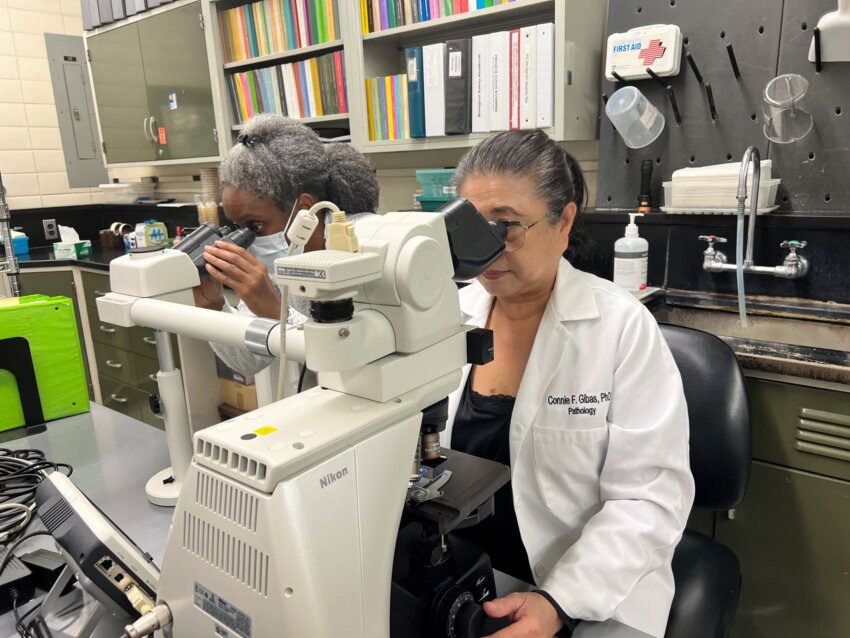
For decades, scientists have studied antibiotic resistance, which is how bacteria evolve mechanisms to evade lifesaving drugs. Now, researchers are warning that a similar challenge is emerging among fungi, where resistance to frontline antifungal medications is making serious infections increasingly difficult to treat.

Nathan Wiederhold, PharmD, director of the Fungus Testing Laboratory and professor in the Department of Pathology and Laboratory Medicine, in the Joe R. and Teresa Lozano Long School of Medicine at The University of Texas at San Antonio said the problem is becoming increasingly urgent as resistant fungi emerge around the globe. Wiederhold is a contributor to a commentary published in May in Nature Medicine on the growing global concern of antifungal resistance.
“Fungal infections are often overlooked because they are not as common as bacterial infections,” Wiederhold said. “But they can be much more difficult to diagnose and treat, and we’re seeing increasing spread and resistance.”
Growing global threat
Antifungal resistance occurs when fungal species develop the ability to survive treatments that once eliminated them. Along with clinical exposure to antifungal medications, scientists now recognize that environmental exposure can also add to resistance.
Many fungi are plant pathogens, and agriculture relies heavily on fungicides to protect crops. Many agricultural fungicides are chemically similar to antifungal drugs used in clinical treatment.
“Environmental exposure to these compounds can select for resistant organisms,” Wiederhold said. “Those resistant fungi can then enter human populations and lead to infections that are much more difficult to treat.”
Because fungal pathogens affect humans, animals and crops, Wiederhold describes antifungal resistance as a “One Health” issue that requires collaboration across human, animal and plant sectors.
Fungal threats drawing concern
Among the growing number of resistant fungi, three pathogens are particularly concerning to scientists and clinicians.
The first is Candida auris, an emerging yeast that has spread rapidly across the globe. First recognized in the United States in 2016, with early cases concentrated on the East Coast, it has since expanded across the country.
“What makes Candida auris especially concerning is its resistance profile,” Wiederhold said. “Many strains are resistant to azoles, one of our major antifungal drug classes, and some are also resistant to amphotericin B, which is often considered a drug of last resort.”
A second major concern is Aspergillus fumigatus, a mold commonly found in the environment. Unlike many fungi associated with crop diseases, A. fumigatus thrives in compost piles and decaying organic matter. Researchers believe exposure to residual agricultural fungicides in these environments has contributed to the development of resistance.
Scientists first began observing resistant A. fumigatus infections in Europe approximately two decades ago. What surprised researchers was that many patients had never before received azole antifungal treatment.
“That was one of the first major clues that resistance could develop through environmental exposure rather than just clinical exposure,” Wiederhold said.
The third emerging threat involves dermatophytes, fungi responsible for common infections such as ringworm and fungal nail disease. Historically, these infections have been localized and relatively easy to treat. However, beginning between 2016 to 2018, researchers in India reported outbreaks involving extensive skin lesions that covered large portions of patients’ bodies and failed to respond to standard therapies.
One dermatophyte species, Trichophyton indotineae, has since spread internationally and is now being detected in North America.
Fungal challenges to South Texas
South Texas faces several unique fungal disease concerns.
One is coccidioidomycosis, commonly known as Valley fever, which is caused by Coccidioides fungi found in dry, arid regions of the southwestern United States and northern Mexico. Although Valley fever has long been endemic in areas such as Arizona and California, researchers have seen its range expand in recent years.
“We’re seeing evidence that it is moving northward and eastward,” Wiederhold said. “We’ve also identified isolates with azole resistance, which is concerning because clinicians need effective treatment options.”
Candida auris also remains a growing concern in Texas, where cases have been identified and healthcare systems continue monitoring for spread.
Building a better response
The Nature Medicine commentary suggests several key strategies for addressing antifungal resistance.
Education and awareness: Clinicians, public health professionals, agricultural stakeholders and the public need greater awareness of fungal diseases and resistance trends. Improved understanding can lead to earlier diagnoses, more appropriate treatments and better prevention efforts.
Stronger surveillance systems: Fungal resistance lacks a coordinated national surveillance program in the United States. Individual laboratories collect valuable data, but there is no national system for tracking resistance patterns.
The Fungus Testing Laboratory at The University of Texas at San Antonio Health Science Center receives fungal isolates from institutions across the United States and Canada. They monitor resistance trends and conduct susceptibility testing. Through funding from the Mycoses Study Group Education and Research Consortium and support from the Centers for Disease Control and Prevention, the laboratory is currently helping track resistance in A. fumigatus and T. indotineae.
“We’re in our third year of this work, but we’re really just scratching the surface,” Wiederhold said.
Infection prevention and antimicrobial stewardship: Appropriate use of antifungal medications and agricultural fungicides can help slow the development of resistance.
“You don’t want to use the strongest drugs or fungicides,” Wiederhold said. “Every time we apply selective pressure, we create opportunities for resistance to emerge.”
Innovation and investment: Developing antifungal drugs is particularly challenging because fungi, like humans, are eukaryotic organisms. Their cellular similarities limit the number of safe drug targets available.
Currently, only three major antifungal drug classes exist. Although promising new therapies are advancing through clinical development, researchers remain concerned that environmental resistance mechanisms could threaten even these next-generation treatments.
In addition to new drugs, Wiederhold said improved diagnostics, expanded surveillance networks and research funding will be essential to halt the threat of antifungal resistance.
What success looks like
Ultimately, success will be measured by improved patient outcomes and slower growth in resistance rates. Achieving these goals, Wiederhold said, requires progress across all five identified action areas.
“Think fungi. We need to recognize that antifungal resistance is an important and growing public health issue. If we can make meaningful advances, we can improve patient outcomes and hopefully stabilize resistance rates,” he said.
Related articles:
Drug resistance on the rise for some skin infection-causing fungi
New center launches with focus on chronic infectious diseases